Jump to content

Katolička misao dana

Оцени ову тему


Препоручена порука

“Ljubav je duša vjere, ona je oživljava; bez ljubavi, vjera umire" (Sermones Dominicales et Festivi II, Messaggero, Padova 1979., str. 37).

Krist, koji je tvoj život, stoji pred tobom raspet, da se ti zagledaš u križ kao u neko zrcalo. Ondje ćeš moći spoznati koliko su smrtonosne bile tvoje rane, koje nijedan drugi lijek ne bi mogao ozdraviti osim krv Sina Božjega. Ako pogledaš dobro, moći ćeš shvatiti koliko su veliki ljudsko dostojanstvo i tvoja vrijednost… Nigdje drugdje čovjek ne može bolje uočiti koliko vrijedi kao kada se zagleda u zrcalo križa” (Sermones Dominicales et Festivi III, str. 213-214).

sv. Antun Padovanski

Lucerna corporis tui est oculus tuus. Si oculus tuus fuerit simplex, totum corpus tuum lucidum erit. Si autem oculus tuus fuerit nequam, totum corpus tuum tenebrosum erit. Evangelium Secundum Matthaeum 6, 22-23

In nomine + Patris, et + Filii, et Spiritus + Sancti. Amen.

Link to comment
Подели на овим сајтовима

“Strive to preserve your heart in peace; let no event of this world disturb it.”

“The soul that is quick to turn to speaking and conversing is slow to turn to God.”

St. John of the Cross

Lucerna corporis tui est oculus tuus. Si oculus tuus fuerit simplex, totum corpus tuum lucidum erit. Si autem oculus tuus fuerit nequam, totum corpus tuum tenebrosum erit. Evangelium Secundum Matthaeum 6, 22-23

In nomine + Patris, et + Filii, et Spiritus + Sancti. Amen.

Link to comment
Подели на овим сајтовима

  • 1 month later...

padre-pio-quotes-awesome.png

Lucerna corporis tui est oculus tuus. Si oculus tuus fuerit simplex, totum corpus tuum lucidum erit. Si autem oculus tuus fuerit nequam, totum corpus tuum tenebrosum erit. Evangelium Secundum Matthaeum 6, 22-23

In nomine + Patris, et + Filii, et Spiritus + Sancti. Amen.

Link to comment
Подели на овим сајтовима

  • 1 month later...

"COSMOS" AND ONE MORE TELLING OF THE TIRED MYTH

Bishop Robert Barron

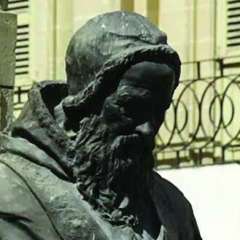
Seth MacFarlane, well known atheist and cartoonist, is the executive producer of the remake of “Cosmos,” which recently made its national debut. The first episode featured, along with the science, an animated feature dealing with the sixteenth century Dominican friar Giordano Bruno, who was burned at the stake by Church officials. A brooding statue of Bruno stands today in the Campo de’ Fiori in Rome on the very spot where the unfortunate friar was put to death. In MacFarlane’s cartoon, Bruno is portrayed as a hero of modern science, and church officials are, without exception, depicted as wild-eyed fanatics and unthinking dogmatists. As I watched this piece, all I could think was...here we go again.

Avatars of the modern ideology feel obligated to tell their great foundation myth over and over, and central to that narrative is that both the physical sciences and liberal political arrangements emerged only after a long twilight struggle against the reactionary forces of religion, especially the Catholic religion. Like the effigies brought out to be burned on Guy Fawkes Day, the bugbear of intolerant and violent Catholicism has to be exposed to ridicule on a regular basis. 

I will leave to the side for the moment the issue of liberal politics’ relation to religion, but I feel obliged, once more, to expose the dangerous silliness of the view that Catholicism and the modern sciences are implacable foes. I would first observe that it is by no means accidental that the physical sciences in their modern form emerged when and where they did, that is to say, in the Europe of the sixteenth century. The great founders of modern science—Copernicus, Galileo, Tycho Brahe, Descartes, Pascal, etc.—were formed in church-sponsored universities where they learned their mathematics, astronomy, and physics. Moreover, in those same universities, all of the founders would have imbibed the two fundamentally theological assumptions that made the modern sciences possible, namely, that the world is not divine—and hence can be experimented upon rather than worshipped—and that the world is imbued with intelligibility—and hence can be understood. I say that these are theological presumptions, for they are both corollaries of the doctrine of creation. If God made the world in its entirety, then nothing in the world is divine; and if God made the world in its entirety, then every detail of the world is marked by the mind of the Creator. Without these two assumptions, the sciences as we know them will not, because they cannot, emerge. 

In fact, from the intelligibility of the universe, the young Joseph Ratzinger (later Pope Benedict XVI) constructed an elegant argument for the existence of God. The objective intelligibility of the finite world, he maintained, is explicable only through recourse to a subjective intelligence that thought it into being. This correspondence, in fact, is reflected in our intriguing usage of the word “recognition” (literally, to think again) to designate an act of knowledge. In employing that term, we are at least implicitly acknowledging that, in coming to know, we are re-thinking what has already been thought by the creative intelligence responsible for the world’s intelligibility. If Ratzinger is right, religion, far from being science’s enemy, is in fact its presupposition. 

Secularist ideologues will relentlessly marshal stories of Hypatia, Galileo, Giordano Bruno and others—all castigated or persecuted by church people who did not adequately grasp the principles I have been laying out. But to focus on these few exceptional cases is grossly to misrepresent the history of the relationship between Catholicism and the sciences. 

May I mention just a handful of the literally thousands of Catholic clerics who have made significant contributions to the sciences? Do you know about Fr. Jean Picard, a priest of the seventeenth century, who was the first person to determine the size of the earth to a reasonable degree of accuracy? Do you know about Fr. Giovanni Battista Riccioli, a seventeenth century Jesuit astronomer and the first person to measure the rate of acceleration of a free-falling body? Do you know about Fr. George Searle, a Paulist priest of the early twentieth century who discovered six galaxies? Do you know about Fr. Benedetto Castelli, a Benedictine monk and scientist of the sixteenth century, who was a very good friend and supporter of Galileo? Do you know about Fr. Francesco Grimaldi, a Jesuit priest who discovered the diffraction of light? Do you know about Fr. George Coyne, a contemporary Jesuit priest and astrophysicist, who for many years ran the Vatican Observatory outside of Tucson? Perhaps you know about Fr. Gregor Mendel, the Augustinian monk who virtually invented modern genetics, and about Fr. Teilhard de Chardin, a twentieth century Jesuit priest who wrote extensively on paleontology, and about Fr. Georges Lemaître, the formulator of the Big Bang theory of cosmic origins. 

Can we please, once and for all, dispense with the nonsense that Catholicism is the enemy of the sciences? When we do, we’ll expose the Seth MacFarlane telling of the story for what it really is: not scientific history but the basest sort of anti-Catholic propaganda.

https://www.wordonfire.org/resources/article/cosmos-and-one-more-telling-of-the-tired-myth/479/

Lucerna corporis tui est oculus tuus. Si oculus tuus fuerit simplex, totum corpus tuum lucidum erit. Si autem oculus tuus fuerit nequam, totum corpus tuum tenebrosum erit. Evangelium Secundum Matthaeum 6, 22-23

In nomine + Patris, et + Filii, et Spiritus + Sancti. Amen.

Link to comment
Подели на овим сајтовима

Mgr Robert Sarah « I'm afraid the West will die »

Lucerna corporis tui est oculus tuus. Si oculus tuus fuerit simplex, totum corpus tuum lucidum erit. Si autem oculus tuus fuerit nequam, totum corpus tuum tenebrosum erit. Evangelium Secundum Matthaeum 6, 22-23

In nomine + Patris, et + Filii, et Spiritus + Sancti. Amen.

Link to comment
Подели на овим сајтовима

Kod nas se djeca već od vrtića uče poslušnosti, disciplini i hijerarhiji da znaju ko je glavni u Crkvi. :) 

https://tinyurl.com/y8xm3km8

dsc03248.JPG

A na vrhu to izgleda ovako:

cq5dam.thumbnail.cropped.750.422.jpeg

f1bea.jpg

Link to comment
Подели на овим сајтовима

To live "in Christ" is to live in a mystery equal to that of the Incarnation and similar to it. For as Christ unites in His one Person the two natures of God and of man, so too in making us His friends He dwells in us, uniting us intimately to Himself. Dwelling in us He becomes as it were our superior self, for He has united and identified our inmost self with Himself. From the moment that we have responded by faith and charity to His love for us, a supernatural union of our souls with His indwelling Divine Person gives us a participation in His divine sonship and nature. A "new being" is brougllt into existence. I become a "new man" and this new man, spiritually and mystically one identity, is at once Christ and myself. The language of the New Testament and the teaching of the Church explain, to the mind of the believer, that this spiritual union of my being with Christ in one "new man" is the work of the Holy Spirit, the Spirit of Love, the Spirit of Christ.

Thomas Merton - New Seeds of Contemplation

Lucerna corporis tui est oculus tuus. Si oculus tuus fuerit simplex, totum corpus tuum lucidum erit. Si autem oculus tuus fuerit nequam, totum corpus tuum tenebrosum erit. Evangelium Secundum Matthaeum 6, 22-23

In nomine + Patris, et + Filii, et Spiritus + Sancti. Amen.

Link to comment
Подели на овим сајтовима

  • 3 weeks later...

"Razjedati nas mora strašen dvom, ali nam je res jasno, kar govorimo o Bogu. Ali smo Boga zamenjali za malika, ki smo si ga sami izdelali, ne iz zlata in kamna, temveč iz človeških idej in upanj, iz plehkih tolažb in praznih čenč?"

Karl Rahner - La figura del prete moderno, Edizioni Paoline, Roma 1969, 22-23

Lucerna corporis tui est oculus tuus. Si oculus tuus fuerit simplex, totum corpus tuum lucidum erit. Si autem oculus tuus fuerit nequam, totum corpus tuum tenebrosum erit. Evangelium Secundum Matthaeum 6, 22-23

In nomine + Patris, et + Filii, et Spiritus + Sancti. Amen.

Link to comment
Подели на овим сајтовима

  • 2 months later...

Lucerna corporis tui est oculus tuus. Si oculus tuus fuerit simplex, totum corpus tuum lucidum erit. Si autem oculus tuus fuerit nequam, totum corpus tuum tenebrosum erit. Evangelium Secundum Matthaeum 6, 22-23

In nomine + Patris, et + Filii, et Spiritus + Sancti. Amen.

Link to comment
Подели на овим сајтовима

Križ je znamenje ljubezni, križ je jamstvo odpuščanja. Ljubezen, ki je ne napaja, ne hrani križ, ni prava ljubezen, temveč le kratkotrajno čustvo. (sv. Pij iz Pietrelcine)

Lucerna corporis tui est oculus tuus. Si oculus tuus fuerit simplex, totum corpus tuum lucidum erit. Si autem oculus tuus fuerit nequam, totum corpus tuum tenebrosum erit. Evangelium Secundum Matthaeum 6, 22-23

In nomine + Patris, et + Filii, et Spiritus + Sancti. Amen.

Link to comment
Подели на овим сајтовима

×
×
  • Креирај ново...