
Jump to content

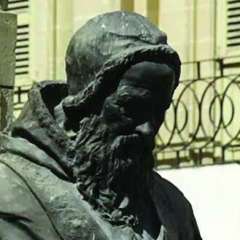
St Hilary of Poitiers (315-368) Father and Doctor of the Church

Оцени ову тему

Препоручена порука


Lucerna corporis tui est oculus tuus. Si oculus tuus fuerit simplex, totum corpus tuum lucidum erit. Si autem oculus tuus fuerit nequam, totum corpus tuum tenebrosum erit. Evangelium Secundum Matthaeum 6, 22-23

In nomine + Patris, et + Filii, et Spiritus + Sancti. Amen.

Link to comment
Подели на овим сајтовима

Hilary of Poitiers (Latin: Hilarius; c. 310 – c. 367)[2] was Bishop of Poitiers and a Doctor of the Church. He was sometimes referred to as the "Hammer of the Arians" (Malleus Arianorum) and the "Athanasius of the West",[3] His name comes from the Latin word for happy or cheerful. In addition to his important work as Bishop, Hilary was married and the father of Abra of Poitiers, a nun and saint who became known for her charity.[4] His optional memorial in the General Roman Calendar is 13 January. In the past, when this date was occupied by the Octave Day of the Epiphany, his feast day was moved to 14 January.[5]


Early life[edit]

Hilary was born at Poitiers either at the end of the 3rd or beginning of the 4th century A.D.[6] His parents were pagans of distinction. He received a good pagan education,[7] which included a high level of Greek.[8] He studied, later on, the Old and New Testament writings, with the result that he abandoned his Neo-Platonism for Christianity, and with his wife and his daughter (traditionally named Saint Abra), was baptized and received into the Church.[3]

The Christians of Poitiers so respected Hilary that about 350 or 353,[9] they unanimously elected him their bishop. At that time Arianism threatened to overrun the Western Church; Hilary undertook to repel the disruption. One of his first steps was to secure the excommunication, by those of the Gallican hierarchy who still remained orthodox Christians, of Saturninus, the Arian Bishop of Arles, and of Ursacius of Singidunum and Valens of Mursa, two of his prominent supporters.[3]

About the same time, Hilary wrote to Emperor Constantius II a remonstrance against the persecutions by which the Arians had sought to crush their opponents (Ad Constantium Augustum liber primus, of which the most probable date is 355).[10] Other Historians refer to this first book to Constantius as "Book Against Valens," of which only fragments are extant.[11] His efforts did not succeed at first, for at the synod of Biterrae (Béziers), summoned by the emperor in 356 with the professed purpose of settling the longstanding dispute, an imperial rescript banished the new bishop, along with Rhodanus of Toulouse, to Phrygia.[12][13]

Hilary spent nearly four years in exile, although the reasons for this banishment remain obscure. The traditional explanation is that Hilary was exiled for refusing to subscribe to the condemnation of Athanasius and the Nicene faith. More recently several scholars have suggested that political opposition to Constantius and support of the usurper Silvanus may have led to Hilary's exile.[6]

https://en.wikipedia.org/wiki/Hilary_of_Poitiers

Lucerna corporis tui est oculus tuus. Si oculus tuus fuerit simplex, totum corpus tuum lucidum erit. Si autem oculus tuus fuerit nequam, totum corpus tuum tenebrosum erit. Evangelium Secundum Matthaeum 6, 22-23

In nomine + Patris, et + Filii, et Spiritus + Sancti. Amen.

Link to comment
Подели на овим сајтовима

×
×
  • Креирај ново...