
Jump to content

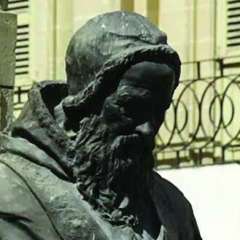
Saint Augustine of Hippo

Оцени ову тему


Препоручена порука

"Vobis sum episcopus, vobiscum cristianus".

Sanctus Aurelius Augustinus Hipponensis

Lucerna corporis tui est oculus tuus. Si oculus tuus fuerit simplex, totum corpus tuum lucidum erit. Si autem oculus tuus fuerit nequam, totum corpus tuum tenebrosum erit. Evangelium Secundum Matthaeum 6, 22-23

In nomine + Patris, et + Filii, et Spiritus + Sancti. Amen.

Link to comment
Подели на овим сајтовима

  • 2 months later...
  • Одговори 33
  • Креирано
  • Последњи одговор

Популарни чланови у овој теми

Популарни чланови у овој теми

Популарне поруке

Bernard

Постоване слике

"Nihil nisi per amicitiam cognoscitur."

Sanctus Aurelius Augustinus Hipponensis

Lucerna corporis tui est oculus tuus. Si oculus tuus fuerit simplex, totum corpus tuum lucidum erit. Si autem oculus tuus fuerit nequam, totum corpus tuum tenebrosum erit. Evangelium Secundum Matthaeum 6, 22-23

In nomine + Patris, et + Filii, et Spiritus + Sancti. Amen.

Link to comment
Подели на овим сајтовима

"Nihil nisi per amicitiam cognoscitur."

("Samo tisto, kar imaš rad, lahko spoznaš.")

Sanctus Aurelius Augustinus Hipponensis

Lucerna corporis tui est oculus tuus. Si oculus tuus fuerit simplex, totum corpus tuum lucidum erit. Si autem oculus tuus fuerit nequam, totum corpus tuum tenebrosum erit. Evangelium Secundum Matthaeum 6, 22-23

In nomine + Patris, et + Filii, et Spiritus + Sancti. Amen.

Link to comment
Подели на овим сајтовима

                                                       to-fall-in-love-with-god-st-augustine-28-aug-2020.jpg?w=583

Lucerna corporis tui est oculus tuus. Si oculus tuus fuerit simplex, totum corpus tuum lucidum erit. Si autem oculus tuus fuerit nequam, totum corpus tuum tenebrosum erit. Evangelium Secundum Matthaeum 6, 22-23

In nomine + Patris, et + Filii, et Spiritus + Sancti. Amen.

Link to comment
Подели на овим сајтовима

                                                       he-bought-brothers-for-himself-st-augustine-28-aug-2020.jpg?w=583

Lucerna corporis tui est oculus tuus. Si oculus tuus fuerit simplex, totum corpus tuum lucidum erit. Si autem oculus tuus fuerit nequam, totum corpus tuum tenebrosum erit. Evangelium Secundum Matthaeum 6, 22-23

In nomine + Patris, et + Filii, et Spiritus + Sancti. Amen.

Link to comment
Подели на овим сајтовима

                                                       god-provides-the-wind-but-man-must-raise-the-sails-st-augustine-14-may-2020.jpg?w=583

Lucerna corporis tui est oculus tuus. Si oculus tuus fuerit simplex, totum corpus tuum lucidum erit. Si autem oculus tuus fuerit nequam, totum corpus tuum tenebrosum erit. Evangelium Secundum Matthaeum 6, 22-23

In nomine + Patris, et + Filii, et Spiritus + Sancti. Amen.

Link to comment
Подели на овим сајтовима

  • 3 months later...

''Voce Ecclesiae loquor.''

Saint Augustine of Hippo

Lucerna corporis tui est oculus tuus. Si oculus tuus fuerit simplex, totum corpus tuum lucidum erit. Si autem oculus tuus fuerit nequam, totum corpus tuum tenebrosum erit. Evangelium Secundum Matthaeum 6, 22-23

In nomine + Patris, et + Filii, et Spiritus + Sancti. Amen.

Link to comment
Подели на овим сајтовима

“The Bible was composed in such a way that as beginners mature, its meaning grows with them.”

 St. Augustine of Hippo, Confessions

Lucerna corporis tui est oculus tuus. Si oculus tuus fuerit simplex, totum corpus tuum lucidum erit. Si autem oculus tuus fuerit nequam, totum corpus tuum tenebrosum erit. Evangelium Secundum Matthaeum 6, 22-23

In nomine + Patris, et + Filii, et Spiritus + Sancti. Amen.

Link to comment
Подели на овим сајтовима

  • 1 month later...

The Confessions of Saint Augustine - Book X, Chapter XXIX

And all my hope is no where but in Thy exceeding great mercy. Give what Thou enjoinest, and enjoin what Thou wilt. Thou enjoinest us continency; and when I knew, saith one, that no man can be continent, unless God give it, this also was a part of wisdom to know whose gift she is. By continency verily are we bound up and brought back into One, whence we were dissipated into many. For too little doth he love Thee, who loves any thing with Thee, which he loveth not for Thee. O love, who ever burnest and never consumest! O charity, my God, kindle me. Thou enjoinest continency: give me what Thou enjoinest, and enjoin what Thou wilt.

https://catholica.us/articles/ConfessionsSaintAgustin.pdf

Lucerna corporis tui est oculus tuus. Si oculus tuus fuerit simplex, totum corpus tuum lucidum erit. Si autem oculus tuus fuerit nequam, totum corpus tuum tenebrosum erit. Evangelium Secundum Matthaeum 6, 22-23

In nomine + Patris, et + Filii, et Spiritus + Sancti. Amen.

Link to comment
Подели на овим сајтовима

  • 1 year later...

                                            15060436262_aba4678d69_k.thumb.jpg.b149ec4728d73a38086337138d5d30b8.jpg


"There is an ecclesiastical discipline, as the faithful know, when the names of the martyrs are read aloud in that place at the altar of God, where prayer is not offered for them. Prayer, however, is offered for other dead who are remembered. It is wrong to pray for a martyr, to whose prayers we ought ourselves be commended.  But by the prayers of the Holy Church, and by the salvific sacrifice, and by the alms which are given for their spirits, there is no doubt that the dead are aided, that the Lord might deal more mercifully with them than their sins would deserve. The whole Church observes this practice which was handed down by the Fathers: that it prays for those who have died in the communion of the Body and Blood of Christ, when they are commemorated in their own place in the sacrifice itself; and the sacrifice is offered also in memory of them, on their behalf. If, then, works of mercy are celebrated for the sake of those who are being remembered, who would hesitate to recommend them, on whose behalf prayers to God are not offered in vain? It is not at all to be doubted that such prayers are of profit to the dead; but for such of them as lived before their death in a way that makes it possible for these things to be useful to them after death."  St. Augustine of Hippo, "Sermons" c. 411 A.D.


"Temporal punishments are suffered by some in this life only, by some after death, by some both here and hereafter, but all of them before that last and strictest judgment. But not all who suffer temporal punishments after death will come to eternal punishments, which are to follow after that judgment."  St. Augustine of Hippo, "The City of God" c. 419 A.D.


"That there should be some fire even after this life is not incredible, and it can be inquired into and either be discovered or left hidden whether some of the faithful may be saved, some more slowly and some more quickly in the greater or lesser degree in which they loved the good things that perish, through a certain purgatorial fire."  St. Augustine of Hippo, "Handbook on Faith, Hope, and Charity" c. 421 A.D.

Lucerna corporis tui est oculus tuus. Si oculus tuus fuerit simplex, totum corpus tuum lucidum erit. Si autem oculus tuus fuerit nequam, totum corpus tuum tenebrosum erit. Evangelium Secundum Matthaeum 6, 22-23

In nomine + Patris, et + Filii, et Spiritus + Sancti. Amen.

Link to comment
Подели на овим сајтовима

                                           51406286581_af6af1bb74_k.thumb.jpg.f03be70f5eb8dab52574f53e98dfa4c1.jpg


St. Monica, 

To St. Augustine before her death:

“All I ask is this, that wherever you may be,

you will remember me at the altar of the Lord.”

Lucerna corporis tui est oculus tuus. Si oculus tuus fuerit simplex, totum corpus tuum lucidum erit. Si autem oculus tuus fuerit nequam, totum corpus tuum tenebrosum erit. Evangelium Secundum Matthaeum 6, 22-23

In nomine + Patris, et + Filii, et Spiritus + Sancti. Amen.

Link to comment
Подели на овим сајтовима

  • 3 months later...

             Sermon of St. Augustine on Christmas Day

                         2_nativite_3.jpg?itok=-CCoSrqC

Christ lowered Himself not for His own personal advantage but for our good; in order to justify us and give us peace and happiness.

That day is called the birthday of the Lord on which the Wisdom of God manifested Himself as a speechless Child and the Word of God wordlessly uttered the sound of a human voice. His divinity, although hidden, was revealed by heavenly witness to the Magi and was announced to the shepherds by angelic voices. With yearly ceremony, therefore, we celebrate this day which saw the fulfillment of the prophecy: “Truth is sprung out of the earth: and justice hath looked down from heaven.”[1] Truth, eternally existing in the bosom of the Father, has sprung from the earth so that He might exist also in the bosom of a mother. Truth, holding the world in place, has sprung from the earth so that He might be carried in the hands of a woman. Truth, incorruptibly nourishing the happiness of the angels, has sprung from the earth in order to be fed by human milk. Truth, whom the heavens cannot contain, has sprung from the earth so that He might be placed in a manger.

For whose benefit did such unparalleled greatness come in such lowliness? Certainly for no personal advantage, but definitely for our great good, if only we believe.

Arouse yourself, O man; for you God has become man. “Awake, sleeper, and arise from among the dead, and Christ will enlighten thee.”[2] For you, I repeat, God has become man. If He had not thus been born in time, you would have been dead for all eternity. Never would you have been freed from sinful flesh, if He had not taken upon Himself the likeness of sinful flesh. Everlasting misery would have engulfed you, if He had not taken this merciful form. You would not have been restored to life, had He not submitted to your death; you would have fallen, had He not succored you; you would have perished, had He not come

Let us joyfully celebrate the coming of our salvation and redemption. Let us celebrate the festal day on which the great and timeless One came from the great and timeless day to this brief span of our day. He has become for us ... justice, and sanctification, and redemption; so that, just as it is written, “Let him who takes pride, take pride in the Lord.”[3] For, so that we might not resemble the proud Jews who, “ignorant of the justice of God and seeking to establish their own, have not submitted to the justice of God.”[4] When the Psalmist had said: “Truth Is sprung out of the earth,” he quickly added: “and justice hath looked down from heaven.”[5] He did this lest mortal frailty, arrogating this justice to itself, should call these blessings its own, and lest man should reject the justice of God in his belief that he is justified, that is, made just through his own efforts. Truth Is sprung out of the earth because Christ who said: “I am the truth”[6] was born of a virgin; and “justice hath looked down from heaven” because, by believing in Him who was so born, man has been justified not by his own efforts but by God. “Truth is sprung out of the earth” because “the Word was made flesh” and “justice hath looked down from heaven” because “every good and perfect gift is from above.”[7] “Truth is sprung out of the earth,” that is, His flesh was taken from Mary; and “justice hath looked down from heaven” because “no one can receive anything unless it Is given to him from heaven.”[8]

“Having been justified therefore by faith, let us have peace with God through our Lord Jesus Christ, through whom we also have access by faith unto that grace in which we stand and exult in the hope of the glory of God.”[9] With these few words, which you recognize as those of the Apostle, it gives me pleasure, my brethren, to mingle a few passages of the psalm [which we are considering] and to find that they agree in sentiment. “Having been justified by faith, let us have peace with God” because “justice and peace have kissed”; “through our Lord Jesus Christ” because '”truth is sprung out of the earth”; “through whom we also have access by faith unto that grace in which we stand, and exult in the hope of the glory of God.” He does not say of our glory, but “of the glory of God” because justice has not proceeded from us but “hath looked down from heaven.”[10] Therefore, “let him who takes pride, take pride in the Lord,”[11] not in himself. Hence, when the Lord whose birthday we are celebrating today was born of the Virgin, the announcement of the angelic choir was made in the words: “Glory to God in the highest, and on earth peace among men of good will.”[12] How can peace exist on earth unless it be because “truth is sprung out of the earth,” that is, because Christ has been born in the flesh? Moreover, “He Himself is our peace, he it is who has made both one”[13] so that we might become men of good will, bound together by the pleasing fetters of unity.

Let us rejoice, then, in this grace so that our glory may be the testimony of our conscience[14] wherein we glory not in ourselves but in the Lord. Hence the Psalmist [in speaking of the Lord] has said: “My glory and the lifter up of my head.”[15] For what greater grace of God could have shone upon us than that, having an only-begotten Son, God should make Him the Son of Man, and thus, in turn, make the son of man the Son of God? Examine it as a benefit, as an inducement, as a token of justice, and see whether you find anything but a gratuitous gift of God.

[1] Ps. 84:12.
[2] Eph. 5:14
[3] I Cor. 1:30-31.
[4] Rom. 10:3.
[5] Ps. 84:12.
[6] Jn. 14:6.
[7] Jn. 1:14, James 1:17.
[8] Jn. 3:27.
[9] Cf., Rom. 5:1-2.
[10] Ps. 84:11-12.
[11] I Cor. 1:30-31.
[12] Lk. 2-14.
[13] Eph. 2:14.
[14] Cf. II Cor. 1:12.
[15] Ps. 3:4.


FSSPX.NEWS

Christ lowered Himself not for His own personal advantage but for our good; in order to justify us and give us peace and happiness.


Lucerna corporis tui est oculus tuus. Si oculus tuus fuerit simplex, totum corpus tuum lucidum erit. Si autem oculus tuus fuerit nequam, totum corpus tuum tenebrosum erit. Evangelium Secundum Matthaeum 6, 22-23

In nomine + Patris, et + Filii, et Spiritus + Sancti. Amen.

Link to comment
Подели на овим сајтовима

  • 3 weeks later...


Chapter 9.—Of Hell, and the Nature of Eternal Punishments.

So then what God by His prophet has said of the everlasting punishment of the damned shall come to pass—shall without fail come to pass,—“their worm shall not die, neither shall their fire be quenched.”1505  In order to impress this upon us most forcibly, the Lord Jesus Himself, when ordering us to cut off 461our members, meaning thereby those persons whom a man loves as the most useful members of his body, says, “It is better for thee to enter into life maimed, than having two hands to go into hell, into the fire that never shall be quenched; where their worm dieth not, and their fire is not quenched.”  Similarly of the foot:  “It is better for thee to enter halt into life, than having two feet to be cast into hell, into the fire that never shall be quenched; where their worm dieth not, and the fire is not quenched.”  So, too, of the eye:  “It is better for thee to enter into the kingdom of God with one eye, than having two eyes to be cast into hell fire:  where their worm dieth not, and the fire is not quenched.”1506  He did not shrink from using the same words three times over in one passage.  And who is not terrified by this repetition, and by the threat of that punishment uttered so vehemently by the lips of the Lord Himself?

Now they who would refer both the fire and the worm to the spirit, and not to the body, affirm that the wicked, who are separated from the kindgdom of God, shall be burned, as it were, by the anguish of a spirit repenting too late and fruitlessly; and they contend that fire is therefore not inappropriately used to express this burning torment, as when the apostle exclaims “Who is offended, and I burn not?”1507  The worm, too, they think, is to be similarly understood.  For it is written they say, “As the moth consumes the garment, and the worm the wood, so does grief consume the heart of a man.”1508  But they who make no doubt that in that future punishment both body and soul shall suffer, affirm that the body shall be burned with fire, while the soul shall be, as it were, gnawed by a worm of anguish.  Though this view is more reasonable,—for it is absurd to suppose that either body or soul will escape pain in the future punishment,—yet, for my own part, I find it easier to understand both as referring to the body than to suppose that neither does; and I think that Scripture is silent regarding the spiritual pain of the damned, because, though not expressed, it is necessarily understood that in a body thus tormented the soul also is tortured with a fruitless repentance.  For we read in the ancient Scriptures, “The vengeance of the flesh of the ungodly is fire and worms.”1509  It might have been more briefly said, “The vengeance of the ungodly.”  Why, then, was it said, “The flesh of the ungodly,” unless because both the fire and the worm are to be the punishment of the flesh?  Or if the object of the writer in saying, “The vengeance of the flesh,” was to indicate that this shall be the punishment of those who live after the flesh (for this leads to the second death, as the apostle intimated when he said, “For if ye live after the flesh, ye shall die”1510, let each one make his own choice, either assigning the fire to the body and the worm to the soul,—the one figuratively, the other really,—or assigning both really to the body.  For I have already sufficiently made out that animals can live in the fire, in burning without being consumed, in pain without dying, by a miracle of the most omnipotent Creator, to whom no one can deny that this is possible, if he be not ignorant by whom has been made all that is wonderful in all nature.  For it is God Himself who has wrought all these miracles, great and small, in this world which I have mentioned, and incomparably more which I have omitted, and who has enclosed these marvels in this world, itself the greatest miracle of all.  Let each man, then, choose which he will, whether he thinks that the worm is real and pertains to the body, or that spiritual things are meant by bodily representations, and that it belongs to the soul.  But which of these is true will be more readily discovered by the facts themselves, when there shall be in the saints such knowledge as shall not require that their own experience teach them the nature of these punishments, but as shall, by its own fullness and perfection, suffice to instruct them in this matter.  For “now we know in part, until that which is perfect is come;”1511 only, this we believe about those future bodies, that they shall be such as shall certainly be pained by the fire.


49826495367_d0cfc70b01_k.thumb.jpg.543613f6a82c42a7444b2fa9c3ad40b3.jpg

Lucerna corporis tui est oculus tuus. Si oculus tuus fuerit simplex, totum corpus tuum lucidum erit. Si autem oculus tuus fuerit nequam, totum corpus tuum tenebrosum erit. Evangelium Secundum Matthaeum 6, 22-23

In nomine + Patris, et + Filii, et Spiritus + Sancti. Amen.

Link to comment
Подели на овим сајтовима

  • 1 month later...

2023-02-19.thumb.png.b2f77d5bac9f8ba51468226c492c7a98.png

Lucerna corporis tui est oculus tuus. Si oculus tuus fuerit simplex, totum corpus tuum lucidum erit. Si autem oculus tuus fuerit nequam, totum corpus tuum tenebrosum erit. Evangelium Secundum Matthaeum 6, 22-23

In nomine + Patris, et + Filii, et Spiritus + Sancti. Amen.

Link to comment
Подели на овим сајтовима

  • Чланови који сада читају   0 чланова

    • Нема регистрованих чланова који гледају ову страницу
×
×
  • Креирај ново...