
Jump to content

Kartuzijani in Kartuzija Pleterje

Оцени ову тему

Препоручена порука

                                velkartuzija.png


Today, throughout the world there are approximately 350 Carthusian monks and nuns in 21 houses: 16 of monks and 5 of nuns. There are five houses in France, four in Spain, three in Italy, two in South Korea and one in Argentina, Brazil, England, German, Slovenia, Switzerland and the USA.


                   map-ang-big.jpg       


WWW.KARTUZIJA-PLETERJE.SI


Lucerna corporis tui est oculus tuus. Si oculus tuus fuerit simplex, totum corpus tuum lucidum erit. Si autem oculus tuus fuerit nequam, totum corpus tuum tenebrosum erit. Evangelium Secundum Matthaeum 6, 22-23

In nomine + Patris, et + Filii, et Spiritus + Sancti. Amen.

Link to comment
Подели на овим сајтовима

                                                   Spirituality

Purpose

The Carthusian Order was founded “to the praise of the glory of God” that He might “unite us to Himself in intimate love” and so we bear abundant fruit. This is the goal of every Christian life; what makes our Order special is that we have no other goal but this. The entire life in Charterhouse is geared to this one aim, that members might “the more ardently seek, the more quickly find, the more perfectly possess God himself” and so attain the “perfection of love” (Rule 1,4). Therefore, we renounce all that does not help us attain that one thing necessary.

Solitude

Jesus said: “He who loves me will keep my word and my Father will love him. We will come and make our home in him.” He lives in us with His Divine life and by His grace transforms us into Himself. Solitude, to which we Carthusians are especially called, assures the ideal condition for such intimate union. “For in solitude there is ever being enacted the great mystery of Christ and his Church, of which our Lady is the outstanding exemplar, but which lies hidden in its entirety in the depths of every faithful soul, where to its unfolding solitude greatly contributes” (Rule 2,1).

Enclosure and Stability

With the choice of limiting living space (enclosure) we unite interior prayer with the body, so that prayer renders God that perfect homage which is his due. On the other hand, stability in the same place (lat. ‘stabilitas loci’) is, according to monastic experience, a necessary condition to fix our thoughts and affections continually on God.

Separation from the World

“Since our Order is totally dedicated to contemplation, it is our duty to maintain strictly our separation from the world; hence, we are freed from all pastoral ministry – no matter how urgent the need for active apostolate is – so that we may fulfill our special role in the Mystical Body of Christ” (Rule 3,9).

Prayer

We Carthusians do not have a unified model of the life of prayer. The solitary vocation contains a great deal of freedom and spontaneity in a relationship of friendship with God. Besides liturgical and other obligatory prayer, the monk is free to choose from the rich treasury of catholic spirituality, whatever helps him to an ever greater intimacy with God. It is not so much a matter of importance in the contemplative life what we do, but, rather, that which God does in us. Therefore, let the monk “make a practice of resorting, from time to time, to a tranquil listening of the heart, that allows God to enter through all its doors and passages” (Rule 4,2).

Obedience

The greatest hindrance in the search for God is without doubt one’s own will, the individual “I”. This we attempt to sacrifice with the help of obedience, which must – if it is to be complete – even extend to one’s personal judgment. Such a thorough emptying of oneself enables us to open ourselves to the operation of the Holy Spirit with childlike simplicity and abandon and so resemble God's Son who came to fulfill the Father's will; at the same time, this relieves us from disordered consern for oneself and the distress and disquiet that accompany it.

Faith

Our life takes place in the darkness and light of Faith. In solitude, we enter the depths of our Faith, which we have received from the Church. The darkness with which we begin our journey in Faith with time changes into the light of Faith, if we open ourselves to the encounter with Jesus as a living Person and allow Him and His gospel to completely overtake us. We do not see what we believe, although the content of Faith becomes to us so present that we can live from it. When we renounce all that is not in conformity with Faith, we come to know the depth and splendor of that, which lives in our hearts.

Joy

“Only those who have experienced the solitude and silence of the wilderness can tell what benefit and divine joy they bring to those who love them. Here strong men can be recollected as often as they wish, abide within themselves, carefully cultivate the seeds of virtue, and be nourished happily by the fruits of paradise. Here one can acquire that eye which, with its clear vision, wounds the Spouse with love, whose pureness can see God. Here they can dedicate themselves to leisure that is occupied and activity that is tranquil. Here, for their labor in the contest, God gives his athletes the long-desired reward: a peace that the world does not know and joy in the Holy Spirit” (St. Bruno, founder of the Carthusian Order).


WWW.KARTUZIJA-PLETERJE.SI


Lucerna corporis tui est oculus tuus. Si oculus tuus fuerit simplex, totum corpus tuum lucidum erit. Si autem oculus tuus fuerit nequam, totum corpus tuum tenebrosum erit. Evangelium Secundum Matthaeum 6, 22-23

In nomine + Patris, et + Filii, et Spiritus + Sancti. Amen.

Link to comment
Подели на овим сајтовима

                            20210820-124919.jpg

20210820-133106.jpg

Lucerna corporis tui est oculus tuus. Si oculus tuus fuerit simplex, totum corpus tuum lucidum erit. Si autem oculus tuus fuerit nequam, totum corpus tuum tenebrosum erit. Evangelium Secundum Matthaeum 6, 22-23

In nomine + Patris, et + Filii, et Spiritus + Sancti. Amen.

Link to comment
Подели на овим сајтовима


Lucerna corporis tui est oculus tuus. Si oculus tuus fuerit simplex, totum corpus tuum lucidum erit. Si autem oculus tuus fuerit nequam, totum corpus tuum tenebrosum erit. Evangelium Secundum Matthaeum 6, 22-23

In nomine + Patris, et + Filii, et Spiritus + Sancti. Amen.

Link to comment
Подели на овим сајтовима

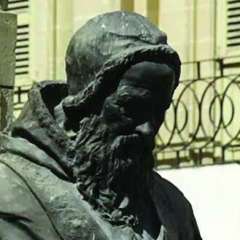
St. Bruno, founder of the Carthusians and patron against diabolic possession

 
10_6_Saint_Bruno%2B%252Bcrucifix%2B537%2Bx%2B626.jpg


On October 6, we celebrate the feast of St. St. Bruno, the founder of the Carthusian order. He was born at Cologne, Germany around 1030. He studied at the school of the Cathedral of Rheims (France) at an early age. He became Canon of the Cathedral and was made the Rector of the University in 1056. Bruno was one of the most remarkable scholars and teacher of his time: "...a prudent man whose word was rich in meaning."

Following an attempt at a solitary life of short duration, he entered the region of Grenoble, where the Bishop, the future Saint Hugues, offered him a solitary site in the mountains of his diocese. In June 1084, the Bishop himself led Bruno and six of his companions to the primitive valley of Chartreuse on a wild mountain range on the edge of the French Alps. There they built a hermitage, consisting of a few log cabins opening towards a gallery which allowed them access to the communal areas of the community -- church, refectory, and chapter room -- without having to suffer too much from intemperate conditions.

After six years of a pleasant solitary life, Bruno was called by Pope Urban II to the service of the Holy See. As a personal adviser to the Pope (a former student), Bruno felt uncomfortable in the Pontifical Court. He lived in Rome for only a short time. With the Pope's blessing, he founded a new hermitage in the forests of Calabria, in the south of Italy. There he died on October 6, 1101. Commentaries on the Psalms and the Epistles of Paul are attributed to him.

St. Bruno was never formally beatified or canonized. However, he became both when Pope Clement X extended his feast to the universal Church in 1674.

The Order founded by Bruno -- the Carthusians -- is one of the strictest in the Church. Carthusians follow the Rule of St. Benedict, but accord it a most austere interpretation; there is perpetual silence and complete abstinence from flesh meat (only bread, legumes, and water are taken for nourishment). Bruno sought to revive the ancient eremitical way of life. His Order enjoys the distinction of never becoming unfaithful to the spirit of its founder, never needing a reform.

He had a great reputation as a protector against diabolic possession and is the patron against possession. He was known for his great devotion to prayer, mortification, and to the Blessed Virgin Mary.

Saint Quote

"Rejoice, my dearest brothers, because you are blessed and because of the bountiful hand of God's grace upon you. Rejoice, because you have escaped the various dangers and shipwrecks of the stormy world. Rejoice because you have reached the quiet and safe anchorage of a secret harbor. Many wish to come into this port, and many make great efforts to do so, yet do not achieve it. Indeed many, after reaching it, have been thrust out, since it was not granted them from above. By your work you show what you love and what you know. When you observe true obedience with prudence and enthusiasm, it is clear that you wisely pick the most delightful and nourishing fruit of divine Scripture."
~from a letter by Saint Bruno to the Carthusians

Prayer (Taken from the 1962 Missal and the 1974 Breviary)

May we be helped by the intercession of St. Bruno, Thy Confessor, O Lord, we beseech Thee, so that we who by our evil deeds have grievously offended Thy Majesty, may by his merits and prayers obtain forgiveness of our sins. Through our Lord....

Lord God, you called Saint Bruno to serve you in a life of solitude. Amidst this world's changes help us, by his prayers, to set our hearts always on you. Through our Lord...

CATHOLICFIRE.BLOGSPOT.COM

On October 6, we celebrate the feast of St. St. Bruno, the founder of the Carthusian order. He was born at Cologne, Germany...


Lucerna corporis tui est oculus tuus. Si oculus tuus fuerit simplex, totum corpus tuum lucidum erit. Si autem oculus tuus fuerit nequam, totum corpus tuum tenebrosum erit. Evangelium Secundum Matthaeum 6, 22-23

In nomine + Patris, et + Filii, et Spiritus + Sancti. Amen.

Link to comment
Подели на овим сајтовима

  • 1 year later...
  • Чланови који сада читају   0 чланова

    • Нема регистрованих чланова који гледају ову страницу
×
×
  • Креирај ново...