
Bernard Написано Септембар 8, 2019 Пријави Подели Написано Септембар 8, 2019 Lucerna corporis tui est oculus tuus. Si oculus tuus fuerit simplex, totum corpus tuum lucidum erit. Si autem oculus tuus fuerit nequam, totum corpus tuum tenebrosum erit. Evangelium Secundum Matthaeum 6, 22-23 In nomine + Patris, et + Filii, et Spiritus + Sancti. Amen. Link to comment Подели на овим сајтовима More sharing options...
Bernard Написано Септембар 8, 2019 Аутор Пријави Подели Написано Септембар 8, 2019 https://www.catholicspiritualdirection.org/onlovinggod.pdf Lucerna corporis tui est oculus tuus. Si oculus tuus fuerit simplex, totum corpus tuum lucidum erit. Si autem oculus tuus fuerit nequam, totum corpus tuum tenebrosum erit. Evangelium Secundum Matthaeum 6, 22-23 In nomine + Patris, et + Filii, et Spiritus + Sancti. Amen. Link to comment Подели на овим сајтовима More sharing options...
Bernard Написано Септембар 8, 2019 Аутор Пријави Подели Написано Септембар 8, 2019 Lucerna corporis tui est oculus tuus. Si oculus tuus fuerit simplex, totum corpus tuum lucidum erit. Si autem oculus tuus fuerit nequam, totum corpus tuum tenebrosum erit. Evangelium Secundum Matthaeum 6, 22-23 In nomine + Patris, et + Filii, et Spiritus + Sancti. Amen. Link to comment Подели на овим сајтовима More sharing options...
Bernard Написано Септембар 22, 2019 Аутор Пријави Подели Написано Септембар 22, 2019 Lucerna corporis tui est oculus tuus. Si oculus tuus fuerit simplex, totum corpus tuum lucidum erit. Si autem oculus tuus fuerit nequam, totum corpus tuum tenebrosum erit. Evangelium Secundum Matthaeum 6, 22-23 In nomine + Patris, et + Filii, et Spiritus + Sancti. Amen. Link to comment Подели на овим сајтовима More sharing options...
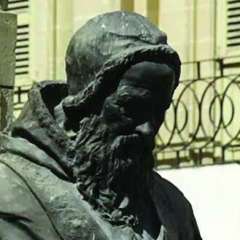
Bernard Написано Новембар 10, 2019 Аутор Пријави Подели Написано Новембар 10, 2019 The ˝Honey-Sweet˝ Doctor Today marks the 862nd anniversary of the death of one of the most important and influential saints in the history of the Church, St. Bernard of Clairvaux (1090–1153). This great saint was the third son of seven children (six boys and one girl) born to a noble family near Dijon in the Burgundy region of France. Bernard was brilliant and handsome, although his severe ascetic practices left him frail and in ill health for most of his adult life. Bernard loved the Church and had a special and intense reverence for the Blessed Mother that had been inculcated by his mother during his childhood. During his lifetime he was known as an exceptional preacher and inspirational speaker. In the sixteenth century, Theophilus Reynauld wrote the book The Gallic Bee, in which he referred to St. Bernard as the “Mellifluous” or “Honey-Sweet” Preacher because his preaching was like “. . . the fragrant aroma of an incense burning in a heart on fire with the Holy Spirit” that flowed from his in-depth study of the Faith, which like “a diligent bee he has extracted the sweet essence from Scripture and the Fathers and refined it in loving meditation.”[1] Pope Pius XII used this moniker as the title for his 1953 encyclical on St. Bernard on the 800th anniversary of his death in which he referred to Bernard as “the last of the Fathers but certainly not inferior to the earlier ones.”[2] As is the case with many saints, Bernard’s holy living attracted others to him, as evidenced by the band of thirty, including four brothers and an uncle, who accompanied him for entrance into the Cistercian community in A.D. 1112; his seventy-year-old father would follow five years later. Although a young man in his twenties and not yet ordained a priest, Bernard’s holiness and gift of leadership moved the abbot of Cîteaux, St. Stephen Harding, to appoint Bernard as the abbot of the first Cistercian daughter house at Clairvaux in 1115. When Bernard and his band of brothers arrived in Clairvaux, they were shocked at the physical locale, which was dark and desolate and known as the “Valley of Wormwood.” The presence of Bernard’s monks transformed the location physically and spiritually so that it was re-named Clairvaux, or “Valley of Light.” Through Bernard’s tireless efforts, the Cistercian community grew rapidly during his lifetime; sixty-eight daughter houses were founded throughout Christendom from Clairvaux, and by the end of the twelfth century there were 263. His fellow monks numbered only twelve when the monastery at Clairvaux was founded in 1115, but by the time of Bernard’s death in 1153 there were 700 monks. St. Bernard was not only a gifted preacher but also a talented writer. His works were read more than any other author, except St. Augustine, during the Middle Ages. Bernard’s theological and spiritual writings, including On the Necessity of Loving God and The Degrees of Humility, are centered on the requirement for the soul to come to an intimate knowledge of God through a deep and personal relationship and experience of Jesus Christ. Bernard taught that the soul could grow closer to Jesus through a relationship with his mother, Mary. He focused his theological Marian writings on her Assumption into heaven and advocated she should be seen as the “Mediatrix of all graces” because of her special relationship with her Son and the privileged place she occupies in the economy of salvation. His love for Mary compelled him to compose prayers and hymns to her, the mpost famous of which is the Memorare. Bernard’s writings were not relegated to the theological or spiritual arena; he also entered the practical field, composing a book on how to be a good leader and pope when his former pupil, Bernardo Paganelli, was elected as Eugenius III (1145–1153). His De Consideratione (Five Books on Consideration) assisted Eugenius in ruling during a turbulent time for the papacy and Christendom. When the Christian city of Edessa in the Latin East was captured and 6,000 men, women, and children were massacred by the Muslim ruler Zengi in 1144, Pope Eugenius III called the Second Crusade (1147–1149). The pope asked his former teacher to spearhead the preaching campaign in order to raise the manpower needed for the Crusade. Bernard undertook his papal-directed preaching tour seriously and despite his ill health ventured across Christendom for nine months, preaching numerous sermons and traveling several hundred miles through France, Flanders, and the German Empire. In those regions he could not visit, he sent letters urging the faithful to take the cross. Bernard’s preaching tour and written exhortations were a resounding success. Warriors took the cross in great numbers, equaling and perhaps rivaling the total forces of the First Crusade. One example, on Easter Day 1146 in the town of Vézaly, illustrates the preaching ability and success of St. Bernard. The “Honey-Sweet” Preacher was invited to participate at a royal assembly in Vézaly by King Louis VII. The king hoped Bernard’s preaching would convince many French warriors to go with him on the armed pilgrimage to the Latin East. The royal hope was realized when, after hearing Bernard preach about the Crusade, so many French warriors took the cross that the previously prepared cloth crosses (which warriors sewed onto their clothing after vowing to go on Crusade) ran out, which prompted St. Bernard to provide additional crosses by tearing his own habit to make more.[3] Despite the resources and manpower of the King Conrad III of Germany and King Louis VII of France, the Second Crusade ended in abject disaster. The Christian forces were harassed and mauled on the march through Muslim territory and finally defeated at the gates of Damascus in 1148. The defeat was a shock to Christendom, which had expected the Crusade to achieve the same miraculous success as the First Crusade fifty years before. St. Bernard was greatly saddened by the failure and even suffered intense criticism and blame. It was a dark time in his life, one that he referred to as the “season of disgrace.” The sting of the failure of the Second Crusade would nag St. Bernard until his death five years later. Bernard was canonized twenty-one years after his death and officially declared a Doctor of the Church in 1830 by Pope Pius VIII. His faith, holy life, and love of Christ and the Blessed Mother inspired not only the inhabitants of Christendom but continue to motivate modern Catholics. St. Bernard of Clairvaux, pray for us! https://www.catholic.com/magazine/online-edition/the-honey-sweet-doctor Lucerna corporis tui est oculus tuus. Si oculus tuus fuerit simplex, totum corpus tuum lucidum erit. Si autem oculus tuus fuerit nequam, totum corpus tuum tenebrosum erit. Evangelium Secundum Matthaeum 6, 22-23 In nomine + Patris, et + Filii, et Spiritus + Sancti. Amen. Link to comment Подели на овим сајтовима More sharing options...
Bernard Написано Децембар 25, 2019 Аутор Пријави Подели Написано Децембар 25, 2019 Lucerna corporis tui est oculus tuus. Si oculus tuus fuerit simplex, totum corpus tuum lucidum erit. Si autem oculus tuus fuerit nequam, totum corpus tuum tenebrosum erit. Evangelium Secundum Matthaeum 6, 22-23 In nomine + Patris, et + Filii, et Spiritus + Sancti. Amen. Link to comment Подели на овим сајтовима More sharing options...
Bernard Написано Март 16, 2020 Аутор Пријави Подели Написано Март 16, 2020 St. Bernard of Clairvaux Mary, O Lady Run, hasten, O Lady, and in your mercy help your sinful servant, who calls upon you, and deliver them from the hands of the enemy. Who will not sigh to you? We sigh with love and grief, for we are oppressed on every side. How can we do other than sigh to you, O solace of the miserable, refuge of outcasts, ransom of captives? We are certain that when you see our miseries, your compassion will hasten to relieve us. O our Sovereign Lady and our Advocate, commend us to your Son. Grant, O blessed one, by the grace which you have merited, that he who through you was graciously pleased to become a partaker of our infirmity and misery, may also through your intercession, make us partakers of his happiness and glory. Amen. (By St Bernard of Clairvaux) Lucerna corporis tui est oculus tuus. Si oculus tuus fuerit simplex, totum corpus tuum lucidum erit. Si autem oculus tuus fuerit nequam, totum corpus tuum tenebrosum erit. Evangelium Secundum Matthaeum 6, 22-23 In nomine + Patris, et + Filii, et Spiritus + Sancti. Amen. Link to comment Подели на овим сајтовима More sharing options...
Bernard Написано Март 21, 2020 Аутор Пријави Подели Написано Март 21, 2020 Prière de saint Bernard En la suivant, on ne dévie pas. En la priant, on ne désespère pas. En pensant à elle, on ne se trompe pas. Si elle te tient par la main, tu ne tomberas pas. Si elle te protège, tu ne craindras pas. Si elle est avec toi, tu es sûr d’arriver au but. Marie est cette noble étoile dont les rayons illuminent le monde entier, dont la splendeur brille dans les cieux et pénètre les enfers. Elle illumine le monde et échauffe les âmes. Elle enflamme les vertus et consume les vices. Elle brille par ses mérites et éclaire par ses exemples. Ô toi qui te vois ballotté au milieu des tempêtes, ne détourne pas les yeux de l’éclat de cet astre si tu ne veux pas sombrer. Si les vents de la tentation s’élèvent, si tu rencontres les récifs des tribulations, regarde l’étoile, invoque Marie. Si tu es submergé par l’orgueil, l’ambition, le dénigrement et la jalousie, regarde l’étoile, crie Marie. Si la colère, l’avarice ou les fantasmes de la chair secouent le navire de ton esprit, regarde Marie. Si, accablé par l’énormité de tes crimes, confus de la laideur de ta conscience, effrayé par l’horreur du jugement, tu commences à t’enfoncer dans le gouffre de la tristesse, dans l’abîme du désespoir, pense à Marie. Que son nom ne quitte pas tes lèvres, qu’il ne quitte pas ton coeur et pour obtenir la faveur de ses prières, n’oublie pas les exemples de sa vie. Saint Bernard (1090-1153), Sur les gloires de la Vierge Marie, Homélie II, 17 https://www.paris.catholique.fr/priere-de-saint-bernard.html Lucerna corporis tui est oculus tuus. Si oculus tuus fuerit simplex, totum corpus tuum lucidum erit. Si autem oculus tuus fuerit nequam, totum corpus tuum tenebrosum erit. Evangelium Secundum Matthaeum 6, 22-23 In nomine + Patris, et + Filii, et Spiritus + Sancti. Amen. Link to comment Подели на овим сајтовима More sharing options...
Bernard Написано Март 24, 2020 Аутор Пријави Подели Написано Март 24, 2020 Lucerna corporis tui est oculus tuus. Si oculus tuus fuerit simplex, totum corpus tuum lucidum erit. Si autem oculus tuus fuerit nequam, totum corpus tuum tenebrosum erit. Evangelium Secundum Matthaeum 6, 22-23 In nomine + Patris, et + Filii, et Spiritus + Sancti. Amen. Link to comment Подели на овим сајтовима More sharing options...
Bernard Написано Мај 17, 2020 Аутор Пријави Подели Написано Мај 17, 2020 Lucerna corporis tui est oculus tuus. Si oculus tuus fuerit simplex, totum corpus tuum lucidum erit. Si autem oculus tuus fuerit nequam, totum corpus tuum tenebrosum erit. Evangelium Secundum Matthaeum 6, 22-23 In nomine + Patris, et + Filii, et Spiritus + Sancti. Amen. Link to comment Подели на овим сајтовима More sharing options...
Bernard Написано Мај 23, 2020 Аутор Пријави Подели Написано Мај 23, 2020 Lucerna corporis tui est oculus tuus. Si oculus tuus fuerit simplex, totum corpus tuum lucidum erit. Si autem oculus tuus fuerit nequam, totum corpus tuum tenebrosum erit. Evangelium Secundum Matthaeum 6, 22-23 In nomine + Patris, et + Filii, et Spiritus + Sancti. Amen. Link to comment Подели на овим сајтовима More sharing options...
Bernard Написано Август 20, 2021 Аутор Пријави Подели Написано Август 20, 2021 Lucerna corporis tui est oculus tuus. Si oculus tuus fuerit simplex, totum corpus tuum lucidum erit. Si autem oculus tuus fuerit nequam, totum corpus tuum tenebrosum erit. Evangelium Secundum Matthaeum 6, 22-23 In nomine + Patris, et + Filii, et Spiritus + Sancti. Amen. Link to comment Подели на овим сајтовима More sharing options...
Bernard Написано Септембар 28, 2022 Аутор Пријави Подели Написано Септембар 28, 2022 "Moja glavna skrb ni, da razložim besedilo, marveč da prežmem srca." (S. Bernardus, Sermones super Cantica canticorum 16, 4) Lucerna corporis tui est oculus tuus. Si oculus tuus fuerit simplex, totum corpus tuum lucidum erit. Si autem oculus tuus fuerit nequam, totum corpus tuum tenebrosum erit. Evangelium Secundum Matthaeum 6, 22-23 In nomine + Patris, et + Filii, et Spiritus + Sancti. Amen. Link to comment Подели на овим сајтовима More sharing options...
Bernard Написано Новембар 17, 2022 Аутор Пријави Подели Написано Новембар 17, 2022 Bernard of Clairvaux’s Letter 26 to Guy, Bishop of Lausanne: A Lesson on the Reformation of the Soul WWW.ACADEMIA.EDU Presented at the 2006 International Medieval Congress, Kalamazoo, MI. Although written to a specific individual, in many ways this letter represents Bernard’s desire for all of... Lucerna corporis tui est oculus tuus. Si oculus tuus fuerit simplex, totum corpus tuum lucidum erit. Si autem oculus tuus fuerit nequam, totum corpus tuum tenebrosum erit. Evangelium Secundum Matthaeum 6, 22-23 In nomine + Patris, et + Filii, et Spiritus + Sancti. Amen. Link to comment Подели на овим сајтовима More sharing options...
Bernard Написано Јул 25, 2023 Аутор Пријави Подели Написано Јул 25, 2023 Lucerna corporis tui est oculus tuus. Si oculus tuus fuerit simplex, totum corpus tuum lucidum erit. Si autem oculus tuus fuerit nequam, totum corpus tuum tenebrosum erit. Evangelium Secundum Matthaeum 6, 22-23 In nomine + Patris, et + Filii, et Spiritus + Sancti. Amen. Link to comment Подели на овим сајтовима More sharing options...
Препоручена порука