
Jump to content

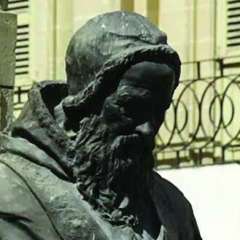
St. Bonaventure - “The Seraphic Doctor”

Оцени ову тему

Препоручена порука

                              St. Bonaventure and the Franciscans Teach Us the Importance of Peace|  National Catholic Register

Today, July 15, marks the feast day of St. Bonaventure, who is called “The Seraphic Doctor” of the Church. St. Bonaventure is known for his leadership of the Franciscans and his great intellectual contributions to theology and philosophy.

St. Bonaventure was born in Bagnorea in Tuscany, Italy. He is widely believed to have been born in the year 1221, although some accounts say 1217.

Sources recount that in his youth, St. Bonaventure was cured of a dangerous illness by the intercession of St. Francis of Assisi. He went on to join the Franciscan Order of Friars Minor in 1243.

After making his vows, he was sent to complete his studies in Paris. He was taught first by Alexander of Hales, an English doctor and Franciscan, and later by John of Rochelle.

While in Paris, he became good friends with St. Thomas Aquinas, with whom he received the degree of Doctor. He also developed a friendship with St. Louis, King of France.

In 1257, St. Bonaventure was chosen to serve as the superior of the Friars Minor. In this position, which he filled for 17 years, he brought peace and order. His impact was so great that today he is sometimes referred to as the second founder of the Franciscans.

Taking on the position after a period of extraordinary expansion for the order, St. Bonaventure worked to preserve a spirit of unity. He calmed the threat of internal dissension that arose over differences in interpreting the message of St. Francis of Assisi. Central to this work was his understanding that the study of philosophy and theology did not oppose the call to poverty that was so central to Franciscan spirituality.

St. Bonaventure proposed a unified and collected text regulating the daily life of the Friars Minor. The text was accepted and ratified in 1260 by the General Chapter of the Order in Narbonne.

Wishing to present an authentic image of the life and teaching of their founder, he zealously collected documents about St. Francis of Assisi and heard testimonies of those who had actually known him. From this information, he compiled a biography of the saint that was adopted as his official biography by the General Chapter of the Friars Minor in 1263.

St. Bonaventure also wrote numerous mystical and ascetical treatises, most famously, “The Soul's Journey into God.”

In 1273, he was appointed by Pope Gregory X as Cardinal and Bishop of Albano. The Pope also asked him to help prepare the Second Ecumenical Council of Lyons, an ecclesial event aimed at re-establishing communion between the Latin and Greek Churches.

St. Bonaventure worked to prepare the Ecumenical Council, but never saw its completion. He died on July 15, 1274, while the council was still in session. He was canonized in 1482 by Pope Sixtus IV.

In his General Audience on March 3, 2010, Pope Benedict XVI spoke about the life of St. Bonaventure. He called to mind the great works of literature, art, philosophy and theology that were inspired by the Christian faith during the time period in which the saint lived.

“Among the great Christian figures who contributed to the composition of this harmony between faith and culture Bonaventure stands out, a man of action and contemplation, of profound piety and prudent government,” Pope Benedict said.

The Pope called on the faithful to take note of “the central role that Christ always played in Bonaventure's life and teaching,” and to imitate the way in which “the whole of his thinking was profoundly Christocentric.”

"Meditation on Christ in His humanity is corporeal in deed, in fact, but spiritual in mind. . . . By adopting this habit, you will steady your mind, be trained to virtues, and receive strength of soul....Let meditation of Christ's life be your one and only aim, your rest, your food, your desire, your study."  -  St. Bonaventure

Lucerna corporis tui est oculus tuus. Si oculus tuus fuerit simplex, totum corpus tuum lucidum erit. Si autem oculus tuus fuerit nequam, totum corpus tuum tenebrosum erit. Evangelium Secundum Matthaeum 6, 22-23

In nomine + Patris, et + Filii, et Spiritus + Sancti. Amen.

Link to comment
Подели на овим сајтовима

Civita di Bagnoregio

27513137633_71a84f7776_5k.thumb.jpg.af98b6ae7eddd937b5bda354ba79070a.jpg

Vsakdo, ki je že obiskal slikovito starodavno viterbsko mestece Civita di Bagnoregio (rojstni kraj Giovannija Fidanze, poznejšega sv. Bonaventura) kraljujoče na ozkem osamljenem vrhu iznad strmih plazovitih pečin - ki jim erozija s spodjedanjem ne prizanaša si lahko predstavlja, kako je že sam pejsaž okolice vplival na domišljijo mladega Giovannija. Nekateri razlagalci trdijo, da je prav topologija rodnega mesteca, v zaokroženosti tako vzvišena nad okolico, vplivala na njegovo poznejše teološko premišljevanje in ustvarjanje, ko je denimo Boga najčistejšo in absolutno bit, razumeval na način, da "zaobjema in vstopa v vsa trajanja in je hkrati njihovo središče in krožnica": Najvišji, ki je začetek in konec vsega, je tako obenem centrum in circumferens, središče in obod.

Lucerna corporis tui est oculus tuus. Si oculus tuus fuerit simplex, totum corpus tuum lucidum erit. Si autem oculus tuus fuerit nequam, totum corpus tuum tenebrosum erit. Evangelium Secundum Matthaeum 6, 22-23

In nomine + Patris, et + Filii, et Spiritus + Sancti. Amen.

Link to comment
Подели на овим сајтовима

                       48287687071_f7b7f95ba6_k.thumb.jpg.8264e3dde3653f4046dc2aa43eb900e8.jpg                    


                                      Stvarjenje človeške duše

1.     Po govoru o telesni in netelesni naravi je potrebno spregovoriti o naravi, ki je sestavljena iz tega obojega: najprej o tem, kar zadeva dušo (ex parte mentis), nato telo (ex parte carnis) in naposled človeka kot celoto (ex parte totius hominis).


Glede razumne duše (anima rationalis) se je v skladu s svetim naukom na kratko potrebno držati naslednjega: ona je oblika (forma), ki biva (ens), živi (vivens), umeva (intelligens) in ima svobodo (libertate utens).


Oblika, ki biva, ne biva sama od sebe niti iz božanske narave, marveč jo je Bog iz nič po stvarjenju privedel v bivanje.


Oblika, ki živi, ne živi iz zunanje narave, marveč iz sebe; nima umrljivega življenja, marveč večno.


Oblika, ki umeva, umeva ne samo bistvo, ki je ustvarjeno, ampak tudi stvariteljsko bistvo (creatrix essentia), SAJ JE NAREJENA KOT NJEGOVA PODOBA PO SPOMINU, UMU (intelligentia) in volji.


Oblika ki ima svobodo, jo ima, ker je vedno svobodna od prisile. V stanju nedolžnosti je bila svobodna od greha in krivde, čeprav ni tako v stanju padle narave. Ta svoboda od prisile pomeni sposobnost volje in razuma (ratio), ki sta glavni moči duše.


2.     Obrazložitev: Prvo počelo je najbolj blaženo in najbolj dobrohotno, zato po svoji najvišji dobrohotnosti stvarstvu priobčuje svojo blaženost, in to ne zgolj duhovnim in bližnjim, temveč tudi telesnim in oddaljenim. Telesnemu in daljnemu stvarstvu jo priobčuje posredno, saj je »božanski zakon takšen, da so najšibkejši vodeni preko srednjih do najvišjih.« Zato prvo počelo za blaženost ne usposablja (fecit beatificabilem) le angelskega in od snovi ločenega duha, ampak tudi (s telesom) povezanega duha, to je človeškega.


Razumna duša je oblika, ki je sposobna prejeti blaženost (anima rationalis forma beatificabilis). Ker pa ni častno dospeti do nagrade blaženosti brez zaslug, te pa se ne dosegajo po slučaju, ampak samo preko tega kar je stvar volje in svobode, je zato potrebno duši dati svobodo izbire z odstranjevanjem vsake prisile, ker je v naravi volje, da ni prisiljena, čeprav je po grehu postala uboga in sužnja greha.


Ker je duša, ki je kot oblika zmožna blaženosti, odprta za Boga (capax Dei) po spominu umu in volji ter je to kot podoba Trojice zaradi enosti v bistvu in trojstvu v močeh, je bilo zato nujno, da je bila duša sposobna spoznati Boga in vse ostalo; zavoljo tega ji je vtisnjena Božja podoba.

Ker nič blaženega blaženosti ne more izgubiti – nič pa ni zmožno blaženosti (beatificabile) če ni nerazpadljivo in nesmrtno, je bilo nujno, da razumna duša po svoji naravi živi nesmrtno življenje.


Sv. Bonaventura - BREVILOQUIUM

https://www.franciskani.si/zbf/wp-content/uploads/2021/09/BBL_vzorec_pokukaj-vame.pdf


Lucerna corporis tui est oculus tuus. Si oculus tuus fuerit simplex, totum corpus tuum lucidum erit. Si autem oculus tuus fuerit nequam, totum corpus tuum tenebrosum erit. Evangelium Secundum Matthaeum 6, 22-23

In nomine + Patris, et + Filii, et Spiritus + Sancti. Amen.

Link to comment
Подели на овим сајтовима

  • 4 months later...

As “pride is the beginning of all sin,” (Eccl. x, 15) so humility is the foundation of all virtue. Learn to be really humble and not, as the hypocrite, humble merely in appearance. -St. Bonaventure

                                20230608_204413.thumb.jpg.c163ed5673dcb03a43284e395915b1ba.jpg

Lucerna corporis tui est oculus tuus. Si oculus tuus fuerit simplex, totum corpus tuum lucidum erit. Si autem oculus tuus fuerit nequam, totum corpus tuum tenebrosum erit. Evangelium Secundum Matthaeum 6, 22-23

In nomine + Patris, et + Filii, et Spiritus + Sancti. Amen.

Link to comment
Подели на овим сајтовима

Although you feel tepid, approach with confidence, for the greater your infirmity the more you stand in need of a physician. —St. Bonaventure

                               20230621_104439.thumb.jpg.dd808edea28ce38546a9500b0d1d1bf2.jpg

Lucerna corporis tui est oculus tuus. Si oculus tuus fuerit simplex, totum corpus tuum lucidum erit. Si autem oculus tuus fuerit nequam, totum corpus tuum tenebrosum erit. Evangelium Secundum Matthaeum 6, 22-23

In nomine + Patris, et + Filii, et Spiritus + Sancti. Amen.

Link to comment
Подели на овим сајтовима

×
×
  • Креирај ново...