
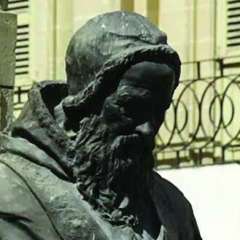
Bernard Написано Новембар 21, 2020 Пријави Подели Написано Новембар 21, 2020 Hildegard of Bingen OSB (German: Hildegard von Bingen; Latin: Hildegardis Bingensis; 1098 – 17 September 1179), also known as Saint Hildegard and the Sibyl of the Rhine, was a German Benedictine abbess, writer, composer, philosopher, Christian mystic, visionary, and polymath of the High Middle Ages.[1][2] She is one of the best-known composers of sacred monophony, as well as the most-recorded in modern history.[3] She has been considered by many in Europe to be the founder of scientific natural history in Germany.[4] Hildegard's fellow nuns elected her as magistra in 1136; she founded the monasteries of Rupertsberg in 1150 and Eibingen in 1165. She wrote theological, botanical, and medicinal texts, as well as letters, liturgical songs for female choirs to sing[2] and poems, while supervising miniature illuminations in the Rupertsberg manuscript of her first work, Scivias.[5] There are more surviving chants by Hildegard than by any other composer from the entire Middle Ages, and she is one of the few known composers to have written both the music and the words.[6] One of her works, the Ordo Virtutum, is an early example of liturgical drama and arguably the oldest surviving morality play.[7] She is also noted for the invention of a constructed language known as Lingua Ignota. Although the history of her formal canonization is complicated, branches of the Roman Catholic Church have recognized her as a saint for centuries. On 10 May 2012, Pope Benedict XVI extended the liturgical cult of St. Hildegard to the entire Catholic Church in a process known as "equivalent canonization". On 7 October 2012, he named her a Doctor of the Church, in recognition of "her holiness of life and the originality of her teaching."[8] Beatification, canonization and recognition as a Doctor of the Church[edit] Hildegard was one of the first persons for whom the Roman canonization process was officially applied, but the process took so long that four attempts at canonization were not completed and she remained at the level of her beatification. Her name was nonetheless taken up in the Roman Martyrology at the end of the 16th century. Her feast day is 17 September. Numerous popes have referred to Hildegard as a saint, including Pope John Paul II[86] and Pope Benedict XVI.[87] On 10 May 2012, Pope Benedict XVI extended the liturgical cult of St. Hildegard to the entire Catholic Church[88] in a process known as "equivalent canonization,"[89] thus laying the groundwork for naming her a Doctor of the Church.[90] On 7 October 2012, the feast of the Holy Rosary, the pope named her a Doctor of the Church, the fourth woman among 36 saints given that title by the Roman Catholic Church.[91] He called her "perennially relevant" and "an authentic teacher of theology and a profound scholar of natural science and music."[92] Hildegard of Bingen also appears in the calendar of saints of various Anglican churches, such as that of the Church of England, in which she is commemorated on 17 September.[93] Hildegard's parish and pilgrimage church in Eibingen near Rüdesheim houses her relics.[94] https://en.wikipedia.org/wiki/Hildegard_of_Bingen#Beatification,_canonization_and_recognition_as_a_Doctor_of_the_Church Lucerna corporis tui est oculus tuus. Si oculus tuus fuerit simplex, totum corpus tuum lucidum erit. Si autem oculus tuus fuerit nequam, totum corpus tuum tenebrosum erit. Evangelium Secundum Matthaeum 6, 22-23 In nomine + Patris, et + Filii, et Spiritus + Sancti. Amen. Link to comment Подели на овим сајтовима More sharing options...
Bernard Написано Новембар 21, 2020 Аутор Пријави Подели Написано Новембар 21, 2020 Lucerna corporis tui est oculus tuus. Si oculus tuus fuerit simplex, totum corpus tuum lucidum erit. Si autem oculus tuus fuerit nequam, totum corpus tuum tenebrosum erit. Evangelium Secundum Matthaeum 6, 22-23 In nomine + Patris, et + Filii, et Spiritus + Sancti. Amen. Link to comment Подели на овим сајтовима More sharing options...
Bernard Написано Новембар 21, 2020 Аутор Пријави Подели Написано Новембар 21, 2020 https://www.healthyhildegard.com/hildegard-von-bingen/ Lucerna corporis tui est oculus tuus. Si oculus tuus fuerit simplex, totum corpus tuum lucidum erit. Si autem oculus tuus fuerit nequam, totum corpus tuum tenebrosum erit. Evangelium Secundum Matthaeum 6, 22-23 In nomine + Patris, et + Filii, et Spiritus + Sancti. Amen. Link to comment Подели на овим сајтовима More sharing options...
Bernard Написано Новембар 21, 2020 Аутор Пријави Подели Написано Новембар 21, 2020 Why is Hildegard of Bingen Important? Hildegard of Bingen produced major works of theology, music and medicine. Her work continues to influence our ways of thinking today. Hildegard is one of only 36 people to be named Doctor of the Church, a title given by the Roman Catholic Church to saints whose writings, research or study on theology or doctrine are useful to Christians “in any age of the Church.” Hildegard von Bingen changed the way we view the world. Among her most recognizable contributions is her theory of Viriditas, the divine force of nature. Hildegard was an early naturopath. She closely observed and documented human ailments and remedies. We have Hildegard of Bingen to thank for discovering many healing plants and natural remedies. Hildegard was an early nutritionist. She influenced the medieval diet popular today. Hildegard taught us how-to live-in moderation. She had a firm belief in routine, discipline, and discretio, the practice of living in balance and bringing the union of the divine and man into order. Hildegard of Bingen taught us that creativity is both an expression and form of prayer. Hildegard was one of the most important composers of the Medieval Period. Her morality play and opera, Ordo Virtutum, is the only Medieval composition surviving today with text and music. Who was Hildegard of Bingen? Canonized in 2012, Saint Hildegard of Bingen has long been recognized as a meaningful religious and historic figure. Born in 1098 to a noble family in Germany’s Rhine Valley this Benedictine abbess was a visionary and polymath, a poet, playwright, composer, philosopher, theologian, Christian mystic, scientist, and Doctor of Medicine. What is Hildegard of Bingen Known for? We appreciate Hildegard today as an extraordinary woman of the Middle Ages who held extremely progressive ideas for her time. Her irrepressible spirit and gifted intellect lifted her above the social, cultural and gender barriers of the time to consult and advise bishops, popes and kings during a period when few women were given respect. St. Hildegard remains known as the originator of German alternative medicine and deserves recognition for her contributions to holistic health and wellness. She promoted the prevention of disease and illness by natural means of a moderate and healthy lifestyle and used the curative powers of natural objects for healing. She memorialized her healing methods in her writings. Hildegard’s Literary Contributions In Causae et Curae (Causes and Cures), she wrote extensively about the cause and symptoms of a variety of health conditions and provided guidance for treating the pathologies with natural remedies. In Physica (The Natural Power of Things), she described the forces of nature and their effect on the health of man. Hildegard is also known as the “Sybil of the Rhine” for her visionary writing. Hildegard’s Visionary Works Liber Scivias (Know the Ways) is perhaps the most famous of her writings. It describes 26 of her most vivid visions and deals with the belief that the universe exists simultaneously within each of us, while also encompassing everything else externally. As the illustrator of Scivias Hildegard is one of the few identifiable artists of the Middle Ages. Her second visionary work, The Book of Life’s Merits (Liber Vitae Meritorum), illustrates the inseparable link between the cosmos, man’s salvation, and moral determination. It contains one of the earliest descriptions of Purgatory. Hildegard of Bingen’s final visionary work, The Book of Divine Works (Liber Divinorum Operum) describes the comprehensive relationship with God, the world around us, and man. Hildegard’s Legacy of Music Hildegard considered music to be the point where heaven and earth meet. She viewed music as the interconnectivity between humans and the universe. Her book of songs (Symphoniae) includes the morality play and opera, Ordo Virtutum (Play of Virtues), which was the first morality play and opera written, preceding others by more than 100 years. What did Hildegard of Bingen do? Hildegard of Bingen was ahead of her time. She was the “first” in many fields, producing major works of theology, music and medicine. Her work helped usher in many new and creative ways of thinking. Hildegard changed the way we see the world and a woman’s place in it. She demonstrated a new way of thinking and living during a time when little was expected of women. Her historical impact stems as much from her role in diligently recording the culmination of beliefs and practices over centuries of human experience as it does from her unique thinking. Her body of work touches on virtually every part of our beliefs and practices. https://www.healthyhildegard.com/why-is-hildegard-of-bingen-important/ Lucerna corporis tui est oculus tuus. Si oculus tuus fuerit simplex, totum corpus tuum lucidum erit. Si autem oculus tuus fuerit nequam, totum corpus tuum tenebrosum erit. Evangelium Secundum Matthaeum 6, 22-23 In nomine + Patris, et + Filii, et Spiritus + Sancti. Amen. Link to comment Подели на овим сајтовима More sharing options...
Bernard Написано Новембар 21, 2020 Аутор Пријави Подели Написано Новембар 21, 2020 Lucerna corporis tui est oculus tuus. Si oculus tuus fuerit simplex, totum corpus tuum lucidum erit. Si autem oculus tuus fuerit nequam, totum corpus tuum tenebrosum erit. Evangelium Secundum Matthaeum 6, 22-23 In nomine + Patris, et + Filii, et Spiritus + Sancti. Amen. Link to comment Подели на овим сајтовима More sharing options...
Bernard Написано Новембар 24, 2020 Аутор Пријави Подели Написано Новембар 24, 2020 4 recepti svete Hildegarde za slasten in zdrav zajtrk 1. TOPEL NAPITEK Sveta Hildegarda priporoča, da prvi jutranji obrok pospremimo s toplim napitkom, ki je lažje prebavljiv od hladnega. Posebej priporoča komarčkov čaj (Foeniculum vulgare). Navadni komarček je na splošno priljubljeno živilo svete Hildegarde, saj lajša bolečine v sklepih in blaži bolezni, kot so artritis, vnetje ovojnic in kit, vnetje debelega črevesja ipd. Bogat je z vitamini A, B, C, E in vlakni ter blagodejno deluje pri napenjanju in lajša bolečine v želodcu. Kdor ni navdušen nad okusom janeža, lahko poskusi šipkov ali metin čaj. Mélanie Schmidt-Ulmann, strokovnjakinja za Hildegardino prehrano, svetuje tudi mešanico belega čaja, bezgovega cveta, citronke in sončničnih cvetnih listov. Lahko pa si doma pripravite tudi okusno pirino kavo iz nemletih pirinih zrn. Dve veliki žlici pirinih kavnih zrn 5 minut kuhamo v 500 ml vrele vode in nato precedimo. Zrna shranimo v hladilniku za morebiten tretma s pirino kavo, ki je učinkovit za izboljšanje prebave. 2. PIRINI KOSMIČI Namesto kruha z maslom in marmelado sveta Hildegarda za zajtrk predlaga žitarice, kot je pira, ki vsebuje 12-krat več magnezija kot pšenica. Vsebuje tudi tiocianate, ki krepijo imunski sistem, spodbujajo tvorbo levkocitov, celično rast in tvorbo matičnih celic. Vsebuje tudi veliko beljakovin in ogljikovih hidratov, kar nam da potrebno moč za začetek dneva. Mélanie Schmidt-Ulmann predlaga naslednji recept iz pirinih kosmičev in svežega sadja: V skledo stresemo sveže pirine kosmiče. Na krožniku pretlačimo banano in dodamo nekaj kapljic limoninega soka. V posebni skledi zmešamo skuto ali sojin jogurt z malo konopljinega olja (ne več kot čajno žličko). Oboje primešamo kosmičem. Olupimo in operemo sveže sezonsko sadje in ga dodamo v skledo (alergiki, bodite pozorni na ‘prepovedano’ sadje, kot so kivi, jagode in slive). Na koncu dodamo ščepec indijskega trpotca (Psyllium) 3. OVSENA KAŠA Z RASTLINSKIM MLEKOM Sveta Hildegarda je zapisala, da oves človeka spravi v dobro voljo. Takole piše: “Oves je topel, ima močan vonj in pikanten okus; je zdrava in dobra hrana za zdrave ljudi. Bistri duha in razveseljuje dušo, človeku daje lep ten in krepko telo.” Recept za ovseno kašo za dobro jutro: V posodo vlijemo 250 ml rastlinskega (mandljevega ali kostanjevega) mleka in dodamo 75 g ovsenih kosmičev. Grejemo na blagem ognju 5 minut. Dodamo med ali rjavi sladkor. Pustimo, da se nekoliko ohladi in zmehča, nato po želji dodamo suho ali sveže sadje. 4. PIRIN KRUH Za nepoboljšljive jedce kruha recept za pirin kruh: V skledi zmešamo 800 g bele pirine moke, 200 g polnozrnate pirine moke in jušno žlico grobe soli. Dve jušni žlici suhega pirinega kvasa dobro premešamo s 60 cl mlačne vode. Tekočino počasi vlijemo v moko in premešamo. Pustimo vzhajati, dokler ne podvoji prostornine (približno 1 uro v toplem prostoru). Vzhajano testo ponovno vmesimo in iz njega naredimo dva hlebčka. Vsakega položimo v pomokan okrogel pekač. Na testo z nožem zarežemo obliko križa. Pustimo ponovno vzhajati od 45 min do 1 ure v toplem prostoru. Pečico segrejemo na 220 stopinj Celzija in pečemo od 45 do 55 minut, dokler skorja zlato ne porjavi. Na spodnjo rešetko damo posodico z vodo, da se testo ne izsuši. Sveta Hildegarda je bila predvsem redovnica in je vselej poudarjala pomen molitve, ki je končno prva sestavina za vsako dobro opravljeno delo. Njena molitev je lep način, kako se vsako jutro postaviti pred Boga in se mu izročiti ter mu izkazati hvaležnost za življenje: Moj Bog, vate zaupam in v veri izpolnjujem vsako delo. Utrjuj me v krepostih, da bo veliko moje veselje. Ti si moje veselje, Bog vesolja! V Ljubezni in veri ti želim slediti, moj Gospod, ki si me ustvaril. Daješ mi, kar je dobro, nič mi ne manjka, imam vse, kar potrebujem in želim. Vera me uči prave molitve: daj mi zgolj tisto, kar je tebi po volji in kar ne mine. V svojem uboštvu zdihujem k tebi, navdihni me za dobra in sveta dela, ki bodo vredna tvoje Ljubezni. Amen. Prispevek je nastal po izvirniku, ki ga je objavila francoska izdaja Aleteie. Prevedla in priredila Jasmina Rihar. https://si.aleteia.org/2020/08/12/4-recepti-svete-hildegarde-za-slasten-in-zdrav-zajtrk/ Lucerna corporis tui est oculus tuus. Si oculus tuus fuerit simplex, totum corpus tuum lucidum erit. Si autem oculus tuus fuerit nequam, totum corpus tuum tenebrosum erit. Evangelium Secundum Matthaeum 6, 22-23 In nomine + Patris, et + Filii, et Spiritus + Sancti. Amen. Link to comment Подели на овим сајтовима More sharing options...
Bernard Написано Новембар 25, 2020 Аутор Пријави Подели Написано Новембар 25, 2020 Ova je juha dobra za želudac, a sveta Hildegarda preporučivala ju je kao lagani večernji obrok. Lucerna corporis tui est oculus tuus. Si oculus tuus fuerit simplex, totum corpus tuum lucidum erit. Si autem oculus tuus fuerit nequam, totum corpus tuum tenebrosum erit. Evangelium Secundum Matthaeum 6, 22-23 In nomine + Patris, et + Filii, et Spiritus + Sancti. Amen. Link to comment Подели на овим сајтовима More sharing options...
Bernard Написано Новембар 28, 2020 Аутор Пријави Подели Написано Новембар 28, 2020 Lucerna corporis tui est oculus tuus. Si oculus tuus fuerit simplex, totum corpus tuum lucidum erit. Si autem oculus tuus fuerit nequam, totum corpus tuum tenebrosum erit. Evangelium Secundum Matthaeum 6, 22-23 In nomine + Patris, et + Filii, et Spiritus + Sancti. Amen. Link to comment Подели на овим сајтовима More sharing options...
Bernard Написано Март 19, 2021 Аутор Пријави Подели Написано Март 19, 2021 ˝Ne gre brez znoja, ker ga imaš od Boga in z njim lahko delaš. Če prineseš sad, boš odnesel plačilo. Zato, o človek, zakaj nisi polje svoje duše pripravil in odstranil nepotrebno trnje in osate? Mene bi moral vprašati, preden si se kot pijan vrgel v svoje delovanje. Če pa me boš iskal v notranjem spoznanju svoje duše, naredim vse, kar obožuješ. In če se pri svojem delu zlomiš, me poišči z vzdihovanjem tudi, če se vse spremeni v razvalino in pepel. Spet te bom vzdignil, če si padel, če me poiščeš in mi govoriš: O Bog, jaz nevreden človek, nimam v sebi moči, da bi obvaroval svojo nedolžnost. Če mi pomagaš, zanetiš v meni ogenj, ki zbriše navade, da bom spet lahko, pil iz izvira žive vode.˝ Hildegard von Bingen Lucerna corporis tui est oculus tuus. Si oculus tuus fuerit simplex, totum corpus tuum lucidum erit. Si autem oculus tuus fuerit nequam, totum corpus tuum tenebrosum erit. Evangelium Secundum Matthaeum 6, 22-23 In nomine + Patris, et + Filii, et Spiritus + Sancti. Amen. Link to comment Подели на овим сајтовима More sharing options...
Bernard Написано Јун 25, 2023 Аутор Пријави Подели Написано Јун 25, 2023 Das Herzwein Rezept geht auf die heilkundige Äbtissin Hildegard von Bingen (* 1098 - † 17.09.1179) zurück. Maria Treben bezieht sich bei diesem auf Dr. Gottfried Hertzka, der das Buch „So heilt Gott“* mit dem Untertitel „Die Medizin der hl. Hildegard von Bingen als neues Natur-Heilverfahren“ geschrieben hat. Zutaten: 10 frische Petersilienstängel Ein Liter naturreiner Wein Ein bis zwei Esslöffel reiner Weinessig 300 g echten Bienenhonig Saubere, vorbereitete Flaschen mit entsprechendem Fassungsvermögen zum Abfüllen des Herzweines. D.h. diese sind mit Hilfe einer kleinen Menge hochprozentigen Alkohols vor der Zubereitung auszuspülen. Zubereitung: Einen Liter natureinen Wein in einen Topf füllen und ein bis zwei Esslöffel feinem Weinessig und 10 frische Petersilienstängel mit Blättern dazu hineingeben. Ob roter weißer Wein genommen wird bleibt gleich. Je nach Geschmack kann dieser selbst gewählt werden. Das Ganze im Topf mit kleiner Flamme erhitzen und 10 Minuten lang sieden. Der Wein kann dabei schäumen, sollte aber nicht sprudeln. 300 g Bienenhonig dem Wein hinzufügen und verrühren. Alles nochmal 4 Minuten leicht kochen. Den Wein abseihen. Noch heiß in die vorbereiteten Flaschen füllen und diese gut verschließen. Es empfiehlt sich die Flaschen sogleich mit Inhalt und Datum zu beschriften, um Verwechslungen auszuschließen. Maria Treben erwähnt zu diesem Herzwein Rezept zwei Punkte. Jeder kann für sich selbst entscheiden, ob der Honig gekocht wird oder nicht. Der entstehende Bodensatz ist nicht schädlich. Diesen kann man mittrinken. Anwendung und Dosierung: Von dem so gewonnenen Herz-Wein trinkt man zwei bis drei Esslöffel am Tag. Maria Treben schreibt, das Rezept habe „ganz große Erfolge bei allen Herzschwächen und echten Herzleiden“ gezeigt und nehme laut Dr. Hertzka „einen breiten Raum in seiner täglichen Arztpraxis ein“. (1) Sie habe selbst dieses Rezept weitergereicht und es habe überraschend gute Erfolge gezeitigt. Bei Angina pectoris führe der Herzwein auch zu merkbarer Besserung. Wer nicht selbst herstellen möchte, kann ihn auch fertig kaufen. Manchmal wird der fertige Wein auch Petersilientrank* genannt. Lucerna corporis tui est oculus tuus. Si oculus tuus fuerit simplex, totum corpus tuum lucidum erit. Si autem oculus tuus fuerit nequam, totum corpus tuum tenebrosum erit. Evangelium Secundum Matthaeum 6, 22-23 In nomine + Patris, et + Filii, et Spiritus + Sancti. Amen. Link to comment Подели на овим сајтовима More sharing options...
Препоручена порука