
Bernard Написано Новембар 27, 2018 Пријави Подели Написано Новембар 27, 2018 Lucerna corporis tui est oculus tuus. Si oculus tuus fuerit simplex, totum corpus tuum lucidum erit. Si autem oculus tuus fuerit nequam, totum corpus tuum tenebrosum erit. Evangelium Secundum Matthaeum 6, 22-23 In nomine + Patris, et + Filii, et Spiritus + Sancti. Amen. Link to comment Подели на овим сајтовима More sharing options...
Bernard Написано Новембар 27, 2018 Аутор Пријави Подели Написано Новембар 27, 2018 Lucerna corporis tui est oculus tuus. Si oculus tuus fuerit simplex, totum corpus tuum lucidum erit. Si autem oculus tuus fuerit nequam, totum corpus tuum tenebrosum erit. Evangelium Secundum Matthaeum 6, 22-23 In nomine + Patris, et + Filii, et Spiritus + Sancti. Amen. Link to comment Подели на овим сајтовима More sharing options...
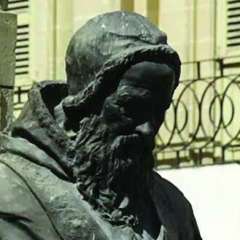
Bernard Написано Новембар 27, 2018 Аутор Пријави Подели Написано Новембар 27, 2018 "A Teacher Who Gave to His Disciples the 'Spirit of Liberty'" VATICAN CITY, MARCH 2, 2011 (Zenit.org).- Here is a translation of the address Benedict XVI gave today during the general audience, held in Paul VI Hall. In his Italian-language address, the Pope focused his meditation on the figure of St. Francis de Sales (1567-1622), bishop of Geneva and doctor of the Church. Dear Brothers and Sisters, "Dieu est le Dieu du coeur humain" [God is the God of the human heart] ("Treatise on the Love of God," I, XV): In these seemingly simple words we see the essence of a great teacher's spirituality, St. Francis de Sales, bishop and doctor of the Church, of whom I would like to speak to you today. Born in 1567, in a French border region, he was the son of the Lord of Boisy, from an ancient and noble family of Savoy. Living across the span of two centuries, the 16th and 17th, he brought together the best of the teachings and cultural conquests of the century that was ending, joining a heritage of humanism with mysticism's longing for the absolute. His formation was quite complete: He did his higher studies in Paris, dedicating himself to theology as well, and at the University of Padua, he studied jurisprudence as his father wished, finishing brilliantly with a degree in utroque iure, canon law and civil law. During his tranquil youth, while reflecting on the thought of St. Augustine and St. Thomas Aquinas, he had a profound crisis that drove him to question his eternal salvation and God's predestination in his respect, thus suffering as a true spiritual drama what were the principal theological questions of his time. He prayed intensely, but doubt tormented him so strongly that for some weeks he could scarcely eat or sleep. At the height of this trial, he went to the church of the Dominicans in Paris, opened his heart and prayed thus: "No matter what happens, Lord, you who have everything in hand, and whose ways are justice and truth, whatever you have established in my regard ... you who are always a just judge and merciful Father, I will love you, Lord [...] I will love you here, O my God, and I will always hope in your mercy, and I will always repeat your praise ... O Lord Jesus, you will always be my hope and my salvation in the land of the living" (I Proc. Canon., vol I, art 4). The 20-year-old Francis found peace in the radical and liberating reality of the love of God: to love him without asking anything in return and to trust in his divine love; not to ask any longer what God will do with me: I will simply love him, regardless of what he does or does not give me. Thus he found peace, and the question of predestination -- which was being discussed at that time -- was resolved, because he no longer sought what he could have from God; he simply loved him, abandoned himself to his goodness. And this would be the secret of his life, which would shine in his principal work, "Treatise on the Love of God." Overcoming his father's resistance, Francis followed the Lord's call and on Dec. 18, 1593, was ordained a priest. In 1602 he became bishop of Geneva, at a time when the city was the stronghold of Calvinism, so much so that the episcopal see was "in exile" in Annecy. As pastor of a poor and tormented diocese, in a mountainous landscape in which he knew well both its harshness and beauty, he wrote: "I found [God] full of sweetness and gentleness among our highest and roughest mountains, where many simple souls loved and adored him in all truth and sincerity; and deer and chamois ran here and there among the frightening frost to proclaim his praises" (Letter to the Mother of Chantal, October 1606, in Oeuvres, Mackey publishers, T. XIII, o. 223). And yet the influence of his life and of his teaching on the Europe of that time and of the following centuries was immense. He was an apostle, preacher, writer, man of action and prayer; committed to carrying out the ideals of the Council of Trent; involved in controversy and dialogue with Protestants, experiencing more and more more the efficacy of personal relationships and of charity, beyond a necessary theological confrontation. He was charged with diplomatic missions at the European level, and with social tasks of mediation and reconciliation. However, above all, St. Francis de Sales was a guide of souls: from his meeting with a young woman, Mrs. de Charmoisy, he got the idea to write one of the most well-read books in the modern age, "Introduction to the Devout Life." From his profound spiritual communion with an exceptional personality, St. Jane Frances de Chantal, a new religious family was born, the Order of the Visitation, characterized -- as the saint wished -- by total consecration to God lived in simplicity and humility, in doing ordinary things extraordinarily well: "... I want my Daughters -- he wrote -- to have no ideal other than that of glorifying [Our Lord] with their humility" (Letter to Monsignor de Marquemond, June 1615). He died in 1622, at 55 years of age, after an existence marked by the harshness of the times and apostolic toil. St. Francis' life was relatively brief, but lived with great intensity. An impression of rare fulfillment emanates from this saint, demonstrated in the serenity of his intellectual research, but also in the richness of his affections, and in the "gentleness" of his teachings, which have had great influence on the Christian conscience. He embodied several meanings of the word "humanity," which, today as yesterday, can denote culture and courtesy, liberty and tenderness, nobility and solidarity. His appearance had something of the majesty of the landscape in which he lived, also preserving simplicity and naturalness. The old words and the images with which he expressed himself surprisingly sound like a native and familiar language to people's ear even today. To Philotea, the fictional recipient of his "Introduction to the Devout Life" (1607), Francis de Sales addressed an invitation that might have seemed at the time revolutionary. It is the invitation to belong completely to God, living his presence in the world and the tasks of one's state in fullness. "My intention is to instruct those who live in the city, in the conjugal state, in the courts [...]" (Preface to "Introduction to the Devout Life"). The document with which Pope Leo XIII, more than two centuries later, would proclaim him doctor of the Church insisted on this extension of the call to perfection, to sanctity. He wrote there: "[true piety] has penetrated to the throne of the king, in the tents of army heads, in the praetorium of judges, in offices, in shops and even in shepherds' huts [...]" (Brief "Dives in misericordia," Nov. 16, 1877). Thus was born the appeal to the laity, that care to consecrate temporal things and sanctify the every day, on which the Second Vatican Council and the spirituality of our time insist. He spoke of the ideal of a reconciled humanity, harmony between action in the world and prayer, between the secular state and the pursuit of perfection, with the help of God's grace, which permeates the human and, without destroying it, purifies it, raising it to the divine heights. To Theotimus, the adult, spiritually mature Christian to whom he would address a few years later his "Treatise on the Love of God" (1616), St. Francis de Sales gives a more complex lesson. It supposes at the beginning a precise vision of the human being, an anthropology: man's "reason," in fact the "reasonable soul," was seen as a harmonious structure, a temple articulated in more spaces around a center, which, together with the great mystics, he called the "summit," the "point" of the spirit, or the depths of the soul. It is the point in which reason, having passed through all its degrees, "closes its eyes" and knowledge becomes altogether one with love (cf. Book I, Chapter XII). The fact that love, in its theological, divine dimension is the reason for being of all things, in an ascending ladder that does not seem to know fractures or abysses, St. Francis de Sales resumed in a famous phrase: "Man is the perfection of the universe; the spirit is man's perfection; love is the perfection of the spirit, and charity is the perfection of love" (ibid., Book X, Chapter I). In an epoch of intense mystical flowering, the "Treatise on the Love of God" was a true and proper summa, as well as a fascinating literary work. His description of the itinerary toward God starts from the recognition of the "natural inclination" (ibid., Book I, Chapter XVI) inscribed in man's heart to love God above all things, despite being a sinner. Following the model of sacred Scripture, St. Francis de Sales speaks of the union between God and man by developing a whole series of images of interpersonal relationships. His God is Father and Lord, spouse and friend; he has maternal and nursing characteristics. He is the sun of which even the night is a mysterious revelation. Such a God draws man to himself with bonds of love, that is of true liberty: "because love does not force or have slaves, but reduces everything under its obedience with such a delicious force that, if nothing is as strong as love, nothing is as lovable as his force" (Book I, Chapter VI). We find in our saint's "Treatise" a profound meditation on the human will and the description of its flowing, passing, dying, to live (cf. Ibid., Book IX, Chapter XIII) in complete abandonment not only to the will of God, but to what pleases him, to his "bon plaisir," to his approval (cf. Ibid., Book IX, Chapter I). At the summit of union with God, in addition to the raptures of contemplative ecstasies, is placed the reappearance of concrete charity, which is attentive to all the needs of others and which he calls "ecstasies of life and works" (Ibid., Book VII, chapter VI). Reading the book on the love of God and even more so the many letters of direction and of spiritual friendship, one perceives what an expert St. Francis de Sales was on the human heart. To St. Jane of Chantal, he wrote: "[...] Here is the general rule of our obedience, written in capital letters: DO ALL THROUGH LOVE, NOTHING THROUGH CONSTRAINT; LOVE OBEDIENCE MORE THAN YOU FEAR DISOBEDIENCE. I want you to have the spirit of liberty, not the kind that excludes obedience -- this is freedom of the flesh -- but the liberty that excludes constraint, anxiety and scruples" (Letter of Oct. 14, 1604). Not for nothing, at the origin of many paths of pedagogy and spirituality of our time we rediscover the stamp of this teacher, without whom there would be no St. John Bosco or the heroic "little way" of St. Thérèse of Lisieux. Dear brothers and sisters, in an age such as ours that seeks liberty, even with violence and disturbance, the timelines of this great teacher of spirituality and peace should not be missed, a teacher who gave to his disciples the "spirit of liberty," the true one, as the culmination of his fascinating and complete teaching on the reality of love. St. Francis de Sales is an exemplary witness of Christian humanism; with his accessible style, with words that at times have the touch of poetry, he reminds that man bears inscribed in his deepest self nostalgia for God and that only in him is found his true joy and most complete fulfillment. Lucerna corporis tui est oculus tuus. Si oculus tuus fuerit simplex, totum corpus tuum lucidum erit. Si autem oculus tuus fuerit nequam, totum corpus tuum tenebrosum erit. Evangelium Secundum Matthaeum 6, 22-23 In nomine + Patris, et + Filii, et Spiritus + Sancti. Amen. Link to comment Подели на овим сајтовима More sharing options...
Bernard Написано Децембар 16, 2018 Аутор Пријави Подели Написано Децембар 16, 2018 Kako se sv. Franjo Saleški žrtvovao za spas duša Bilo je to vrijeme kad je diljem Europe bijesnila protestantska reformacija. Cijela sela i cijele provincije su pale pod krivovjerjem. Životi su izgubljeni, uništavalo se fizički i duhovno. Bio je to rat za duše, a Bog i tada šalje svoje vojnike najneuobičajenije vrste. Sv. Franjo Saleški bio je prvorođeni sin bogate francuske plemićke obitelji. Bio je zgodan i dobro obrazovan, vješt u mačevanju, jahanju i plesu (napomena: postoji razlika između plesova nekada i sada); bio je primjeran aristokrata koji bi bio dobrodošao u svaku dobru kuću. Obrazovao se da bi postao sudac i studij mu je dobro išao. Zatim, jedne noći kad je Franjo imao osamnaest godina, išao je na jednu teološku raspravu o predodređenju (predestinaciji – prema tom krivovjerju već je unaprijed određeno tko će u raj tko će u pakao, tko će se spasiti a tko ne). To učenje ga je je potreslo dna duše i ispunio ga sa takvim strahom i nelagodom da ga je kroz naredne dvije godine to stanje dovelo i do fizičke bolesti, a ponekad se osjećao tako loše da je bio prikovan za krevet. Konačno, posljednjim snagama odvukao se do stare Pariške župe i molio “Memorare” ispred slike Gospe od Oslobođenja. Od tog trenutka pa nadalje nikada nije očavajavao u vezi Božje ljubavi za sve ljude i Njegova plana za Njegovu djecu i Franjo se zavjetuje Bogu na djevičanstvo. Ljudi u njegovu okruženju su ga počeli pitati je li se odlučio na svećenički poziv. Mjesni biskup ga je osobno pitao, ali mladi Franjo je ostao tih u vezi toga. Želio je da volja Božja bude neupitna prije nego krene na put svećeništva i čekao je neki znak koji ne bi mogao zanijekati. Znak je došao jednog dana dok je Franjo otišao na jahanje. Iako uspješan jahač nalazi se u neuspjehu, pao je s konja tri puta. Što je bilo još znakovitije, svaki put kad bi pao njegov mač i korice pali su na pod u obliku križa. Uzimajući ovo kao siguran znak od Boga koji je čekao, Franjo prima sveti red i započinje svoj život kao svećenik. U početku stvari nisu dobro krenule. Župljani su osjećali kako ih Franjo u svojim propovijedima ismijava i nekoliko ljudi izvještava da ih ovaj svećenik kontrolira i da je usmjeren na sebe. U ovakvom neuspjehu Franjo se odluči na nešto drugo: Otići u Švicarsku u misiju gdje će pokušati preobratiti 60 000 ljudi koji su pali pod krivovjerje Kalvinizma. S vjere i u pratnji jedino svog rođaka, Franjo ide pitati dopuštenje da ide u leglo krivovjerja o predestinciji, koje je i njega samoga jednom duboko potreslo. Biskup se složio iako nije bilo novca da podupre njegovu misiju, a novac nije dobio ni od oca. Neustrašiv, Franjo ide u Švicarsku gdje ne nailazi na dobrodošlicu nego na pokušaj atentata, na zatvorena vrata i na proždrljive vukove. Kad nije bilo ni pojate u kojoj bi spavao Franjo bi spavao na stablu i dobro se zavezao kako ne bi po noći pao pa ga pojele divlje zvijeri. Jedne noći temperatura je bila tako niska da je kad se probudio shvatio da se smrzao. Tri godine je nastavio ovako živjeti u neprijateljskom okruženju. Tri godine a niti jednog obraćenika. Situacija je to u kojoj bi se čovjek obeshrabrio ili postao nasilan. Franjo ne. Umjesto toga uhvatio se pisanja. Pisao je svoje propovijedi i stavljao ih pod vrata neprijateljski raspoloženih mještana te imajući pouzdanja u Boga da će On raditi u njihovim srcima. S vremenom odnosi su se popravili. Djeci je bilo dopušteno da se igraju s Franjom, a kad su roditelji vidjeli kako on s njima nježno postupa s malenima počeli su i sami razgovarati sa svećnikom. Polako, Franjo napušta Švicarsku a njegova ljubaznost i strpljenje pomaže ljudima da se vrate sakramentima (40 000 ljudi). U našim danima buke i instant zadovoljenja, u doba nasilja pod maskom ideološkog žara i mi trebamo više zagovor Franje Saleškog. I nama treba njegov primjer strpljenja i potpune vjere u Božju savršenu ljubav. Njegov savjet da se “usred raznih vremena povučemo u središte srca, pa čak i kad smo izvana u razgovoru s drugima, te da tamo razgovaramo s Bogom” je dobrodošao savjet i nama u našem dobu informacija. a njegovo upozorenje da “biti anđeo u molitvi, a zvijer u odnosu prema drugima znači hramati na obje noge” je dobro upozorenje i za našu kulturu “imidža”. Svetac zaštitinik novinara, sv. Franjo poučava ne samo da treba biti pobožan nego da trebate taj pobožni život učiniti lijepim, vrijednim promatranja. http://magnifikat.hr/kako-se-sv-franjo-saleski-zrtvovao-za-spas-dusa-2/ Lucerna corporis tui est oculus tuus. Si oculus tuus fuerit simplex, totum corpus tuum lucidum erit. Si autem oculus tuus fuerit nequam, totum corpus tuum tenebrosum erit. Evangelium Secundum Matthaeum 6, 22-23 In nomine + Patris, et + Filii, et Spiritus + Sancti. Amen. Link to comment Подели на овим сајтовима More sharing options...
Bernard Написано Јануар 29, 2019 Аутор Пријави Подели Написано Јануар 29, 2019 https://www.catholicspiritualdirection.org/devoutlife.pdf Lucerna corporis tui est oculus tuus. Si oculus tuus fuerit simplex, totum corpus tuum lucidum erit. Si autem oculus tuus fuerit nequam, totum corpus tuum tenebrosum erit. Evangelium Secundum Matthaeum 6, 22-23 In nomine + Patris, et + Filii, et Spiritus + Sancti. Amen. Link to comment Подели на овим сајтовима More sharing options...
Zayron Написано Јануар 30, 2019 Пријави Подели Написано Јануар 30, 2019 Moravian dulcimer folk music RADIO Moravian brass folklore music Link to comment Подели на овим сајтовима More sharing options...
Bernard Написано Јануар 31, 2019 Аутор Пријави Подели Написано Јануар 31, 2019 10 Brilliant Quotes from St. Francis de Sales on Cultivating Peace There is good reason that St. Francis de Sales is the patron of writers—he really had a way with words. During his lifetime, he wrote pamphlets defending the faith that actually converted many people away from heresy. He also wrote books advising laypeople in the spiritual life, which was a revolutionary concept at the time. These books instructed ordinary people in how to grow in spiritual life according to their vocation, helping them to understand that holiness wasn’t just for those in the religious life. We still have a lot we can learn from St. Francis de Sales today! 1. “Have patience in all things—but first of all, with yourself.” True growth happens slowly. We are all human beings, prone to making mistakes, and we can’t let our faults frustrate us. Instead, we can acknowledge in humility that we’ve messed up and ask God to forgive us and help us. We can’t expect to be perfect; we must allow ourselves to be dependent upon Him. 2. “Never be in a hurry; do everything quietly and in a calm spirit. Do not lose your inner peace for anything whatsoever, even if your whole world seems upset.” St. Francis de Sales struggled with anger. In his youth he was hotheaded, but in adulthood he was known for his incredible patience and calm spirit—a direct result of prayer. When he recognized that his short temper was holding him back and drawing his attention away from God, he prayed for inner peace and made efforts to hold back his anger. As a result, he learned the value of maintaining inner peace in all things. 3. “There was never an angry man that thought his anger unjust.” When we are consumed with anger, it can blind us to the truth of the situation. Our own perspective always seems right—and everyone else utterly wrong—when it’s filtered through the lens of passionate fury. Only if we remain calm can we see the truth. 4. “Those who love to be feared fear to be loved.” When we seek power over relationships, it is a sign that we are letting fear run our lives instead of love. Allowing ourselves to be loved means relinquishing control and making ourselves vulnerable, but it is always worth it. 5. “Retire at various times into the solitude of your own heart, even while outwardly engaged in discussions or transactions with others, and talk to God.” If we learn to rely on God’s love to sustain us, even as we are surrounded with other distractions, we will find unfailing support through the ups and downs of our lives. Every so often, we need to take a moment and direct our attention to God’s presence. 6. “Reputation is rarely proportioned to virtue.” A reminder that we should never be too preoccupied with what others think about us—what really matters is what God thinks of us, and public opinion rarely aligns with God’s opinion. 7. “When you encounter difficulties and contradictions, do not try to break them, but bend them with gentleness and time.” Rather than reacting forcefully in the moment, we can effect more lasting change if we respond with patience and kindness, never allowing the challenges we face to disturb our inner peace. 8. “True progress quietly and persistently moves along without notice.” God works powerfully and mysteriously. Often we don’t realize the changes He’s making in our lives while they’re happening, but when we look back, we see how He has led us. But if we despair in the moment that it seems we are making no progress, we might become discouraged and give up. Keeping our focus outward, on God and others instead of on ourselves, will leave room for God to do His work in us. 9. “Half an hour’s meditation each day is essential, except when you are busy. Then a full hour is needed.” Don’t have time to pray? That means you need to pray even longer than usual. It seems counterintuitive, but it’s actually true—when we are overscheduled and overstressed, the only way we can survive is if we abandon ourselves to God. Time spent in prayer will help us to step back and see our lives more clearly, and we will be able to discern which things deserve our attention and which things just aren’t necessary. Only prayer will help us get our priorities in order. 10. “Be who you are and be that well.” Each of us has different gifts to offer the world, and comparison will only distract us from the amazing gifts we’ve been given. Instead of trying to be someone else, strive to become the best version of yourself. Recognize that God has given you a very particular mission, one that only you are equipped to carry out. http://www.ignitumtoday.com/2017/01/11/10-brilliant-quotes-st-francis-de-sales-cultivating-peace/ Lucerna corporis tui est oculus tuus. Si oculus tuus fuerit simplex, totum corpus tuum lucidum erit. Si autem oculus tuus fuerit nequam, totum corpus tuum tenebrosum erit. Evangelium Secundum Matthaeum 6, 22-23 In nomine + Patris, et + Filii, et Spiritus + Sancti. Amen. Link to comment Подели на овим сајтовима More sharing options...
Bernard Написано Јул 10, 2019 Аутор Пријави Подели Написано Јул 10, 2019 Lucerna corporis tui est oculus tuus. Si oculus tuus fuerit simplex, totum corpus tuum lucidum erit. Si autem oculus tuus fuerit nequam, totum corpus tuum tenebrosum erit. Evangelium Secundum Matthaeum 6, 22-23 In nomine + Patris, et + Filii, et Spiritus + Sancti. Amen. Link to comment Подели на овим сајтовима More sharing options...
Bernard Написано Септембар 5, 2019 Аутор Пријави Подели Написано Септембар 5, 2019 Lucerna corporis tui est oculus tuus. Si oculus tuus fuerit simplex, totum corpus tuum lucidum erit. Si autem oculus tuus fuerit nequam, totum corpus tuum tenebrosum erit. Evangelium Secundum Matthaeum 6, 22-23 In nomine + Patris, et + Filii, et Spiritus + Sancti. Amen. Link to comment Подели на овим сајтовима More sharing options...
Препоручена порука