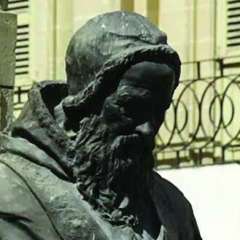
Bernard Написано Јун 5, 2022 Пријави Подели Написано Јун 5, 2022 Who is this Guy and Why Haven’t I Heard of Him? Chesterton argued eloquently against all the trends that eventually took over the 20th century: materialism, scientific determinism, moral relativism, and spineless agnosticism. He also argued against both socialism and capitalism and showed why they have both been the enemies of freedom and justice in modern society. And what did he argue for? What was it he defended? He defended “the common man” and common sense. He defended the poor. He defended the family. He defended beauty. And he defended Christianity and the Catholic Faith. These don’t play well in the classroom, in the media, or in the public arena. And that is probably why he is neglected. The modern world prefers writers who are snobs, who have exotic and bizarre ideas, who glorify decadence, who scoff at Christianity, who deny the dignity of the poor, and who think freedom means no responsibility. But even though Chesterton is no longer taught in schools, you cannot consider yourself educated until you have thoroughly read Chesterton. And furthermore, thoroughly reading Chesterton is almost a complete education in itself. Chesterton is indeed a teacher, and the best kind. He doesn’t merely astonish you. He doesn’t just perform the wonder of making you think. He goes beyond that. He makes you laugh. Just a moment... WWW.CHESTERTON.ORG Lucerna corporis tui est oculus tuus. Si oculus tuus fuerit simplex, totum corpus tuum lucidum erit. Si autem oculus tuus fuerit nequam, totum corpus tuum tenebrosum erit. Evangelium Secundum Matthaeum 6, 22-23 In nomine + Patris, et + Filii, et Spiritus + Sancti. Amen. Link to comment Подели на овим сајтовима More sharing options...
Bernard Написано Јун 9, 2022 Аутор Пријави Подели Написано Јун 9, 2022 Some of the most civilized and highly organized cultures, like Carthage at its wealthiest, had human sacrifice at its worst. Culture, like science, is no protection against demons. Abortion is the Antichrist's demonic parody of the Eucharist. That's why it uses the same holy words, "This is my body," with the blasphemously opposite meaning. The next great heresy is going to be simply an attack on morality; and especially sexual morality. And it is coming from the living exultant energy of the rich resolved to enjoy themselves at last. The madness of tomorrow is not in Moscow, but much more in Manhattan. When all are sexless there will be equality. There will be no women and no men. There will be but a fraternity, free and equal. The only consoling thought is that it will endure but for one generation. Lucerna corporis tui est oculus tuus. Si oculus tuus fuerit simplex, totum corpus tuum lucidum erit. Si autem oculus tuus fuerit nequam, totum corpus tuum tenebrosum erit. Evangelium Secundum Matthaeum 6, 22-23 In nomine + Patris, et + Filii, et Spiritus + Sancti. Amen. Link to comment Подели на овим сајтовима More sharing options...
Bernard Написано Јун 10, 2022 Аутор Пријави Подели Написано Јун 10, 2022 A strange fanaticism fills our time: the fanatical hatred of morality, especially of Christian morality. It is the tendency of people who are liberal in theology to be illiberal in everything else. Lucerna corporis tui est oculus tuus. Si oculus tuus fuerit simplex, totum corpus tuum lucidum erit. Si autem oculus tuus fuerit nequam, totum corpus tuum tenebrosum erit. Evangelium Secundum Matthaeum 6, 22-23 In nomine + Patris, et + Filii, et Spiritus + Sancti. Amen. Link to comment Подели на овим сајтовима More sharing options...
Bernard Написано Август 12, 2023 Аутор Пријави Подели Написано Август 12, 2023 Lecture 41: St. Francis of Assisi by Dale Ahlquist The Best Book Ever Written on St. Francis Chesterton’s ten “biographies” are more like commentaries rather than accounts of the life and work of their subjects. Heavy on the analysis, light on the narrative. Even lighter on the facts. His subjects sometimes even appear to be secondary to the larger themes he wishes to discuss. His book on St. Francis, however, is unlike any of his other biographies. There are many more facts. The narrative is quite straightforward and highly dramatic. The analysis is supportive rather than overwhelming. Chesterton’s other biographies are really overwhelmed by Chesterton (which, in most cases, is what we would prefer); this one, however, is rightly filled to overflowing by the great saint of Assisi. Chesterton not only gets St. Francis to speak for himself, he does it in the way the little friar would have preferred: by conveying not his words, but his life. Chesterton describes St. Francis as “a poet whose whole life was a poem.” This is the first real book written after Chesterton’s reception into the Catholic Church, the others being collections of poems, essays, and mysteries. Yet, we cannot sense much transition in Chesterton’s writing. One reason is that his conversion was the culmination of a long steady process in which he never really changed his way of thinking. It was more of a full flowering of all the ideas he had him. There is another reason, and it has to do with St. Francis. Chesterton had always admired this saint. Francis, he says, had “never been a stranger” to him and was like a bridge connecting Chesterton’s early literary life with the later. St. Francis is one of the most popular saints and one of the most misunderstood. Chesterton says the world appreciates the saint but not the sanctity. Chesterton describes Francis’ transition from being a soldier and fighter to being a builder and a reformer. He describes Francis as troubadour and a clown of God, singing and dancing for his Lord. Finally Chesterton probes deeply the saint’s mysticism. The amazing thing about mysticism is how physical it is. Everything in the story of Francis is palpable. He gives away all his possessions to the poor, including the clothes off his back (and also, somewhat unwisely, all his father’s possessions, too.) He hears the voice of Christ speaking to him from a crucifix hanging on the wall in the Church of St. Damian, asking to rebuild the church, and immediately gathers stones and starts to repair the building. He wears a rag, with a rope for a belt. He embraces poverty the way other men embrace wealth, he hungers after fasting the way others hunger for food. He embraces not only all men and women as his brothers and sisters, but all creatures great and small. After achieving a spiritual depth that would have been more than enough for the rest of us, Francis rushes farther, deeper. He disappears into a cave to be alone with God. The man who came out of that cave, says Chesterton, was not the man who went in. Whatever happened to him “must remain greatly dark to most of us, [we] who are ordinary and selfish men whom God has not broken to make anew.” And yet interestingly enough, Chesterton does seem to know what it is. The mystic, he says, passes through that moment when there is nothing but God. If a man saw the world upside down, with all the trees and towers hanging head downwards as in a pool, one effect would be to emphasise the idea of dependence… He would be thankful to God for not dropping the whole cosmos like a vast crystal to be shattered into falling stars. Perhaps St. Peter saw the world so, when he was crucified head downwards…In a…cynical sense…men have said “Blessed is he that expecteth nothing, for he shall not be disappointed.” It was in a wholly happy and enthusiastic sense that St. Francis said, “Blessed is he who expecteth nothing, for he shall enjoy everything.” It was by this deliberate idea of starting from zero…that he did come to enjoy even earthly things as few people have enjoyed them. Like Christ Himself, this imitator of Christ developed a following. Francis went with eleven companions in peasant costume to ask Pope Innocent III to create a new religious order.But many of the followers of St. Francis treated him as the founder of a religion. The Franciscan spirit brought a certain freshness to all the world. And a freshness to the Church as well. For the Church at this time was over a thousand years old, and was feeling its age. The freshness and freedom of the first Christians seemed as lost and far away then as much as it does now. The Church certainly needed the renewal that Francis brought, but there was a real danger that the sweeping movement of Francis would sweep up all of Christendom. The Pope understood that as great as Francis was, it was not necessary that every Christian should become like Francis. The Pope rightly determined that if the Franciscan movement had turned into a new religion, it would have been a narrow religion, something less than the Universal Church. Chesterton holds Francis up as a mirror of Christ, reflecting the light of Christ as the moon reflects the sun. Francis’ humility prevented him from ever realizing this. He “was full of the sentiment that he had not suffered enough to be worthy even to be a distant follower of his suffering God.” He did not feel he was “worthy even of the shadow of the crown of thorns.” But he apparently was worthy. Francis, the Mirror of Christ, literally bore on his body the wounds of Christ. Just a moment... WWW.CHESTERTON.ORG Lucerna corporis tui est oculus tuus. Si oculus tuus fuerit simplex, totum corpus tuum lucidum erit. Si autem oculus tuus fuerit nequam, totum corpus tuum tenebrosum erit. Evangelium Secundum Matthaeum 6, 22-23 In nomine + Patris, et + Filii, et Spiritus + Sancti. Amen. Link to comment Подели на овим сајтовима More sharing options...
Bernard Написано Август 12, 2023 Аутор Пријави Подели Написано Август 12, 2023 http://www.gkc.org.uk/gkc/books/St_Francis.html Lucerna corporis tui est oculus tuus. Si oculus tuus fuerit simplex, totum corpus tuum lucidum erit. Si autem oculus tuus fuerit nequam, totum corpus tuum tenebrosum erit. Evangelium Secundum Matthaeum 6, 22-23 In nomine + Patris, et + Filii, et Spiritus + Sancti. Amen. Link to comment Подели на овим сајтовима More sharing options...
Препоручена порука